




FutureMinds Lab Strengthens Young People’s Skills for a Digital Future through Cloud Computing, AI and Cybersecurity
BiH continues to face significant challenges in aligning its workforce with the growing needs of the digital economy. Analyses by the Organisation for Economic Co-operation and Development (OECD) and UNICEF point to a shortage of digital skills, limited access to modern infrastructure, and a persistent gap between what the education system provides and the knowledge demanded by the labour market.
This gap is particularly visible among young people entering the labour market. Formal education provides an important foundation, but the technologies and tools used by companies are evolving much faster than curricula. Artificial intelligence, cloud computing and cybersecurity are increasingly shaping how companies process data, protect systems and develop new services. As a result, the knowledge expected from young people seeking to build careers in the digital economy is also changing. Young people therefore need opportunities to understand how these skills are applied in real situations, through assignments, practical exercises and work on concrete solutions.
It was in response to this need that specialised training programs in artificial intelligence, cloud computing and cybersecurity were developed within the FutureMinds Lab project. The project is implemented by the University Sarajevo School of Science and Technology (SSST) within the Private Sector Development Initiative in BiH, co-financed by the European Union and the German Federal Ministry for Economic Cooperation and Development (BMZ). The activities build on previous results and the University’s participation in the its4health Digital Innovation Hub.
Jens Elsner, Director of the Sustainable Economic Development and Employment Promotion Programme (SEDEP) in Bosnia and Herzegovina, believes that areas such as artificial intelligence and cybersecurity are increasingly shaping the way companies operate. “Topics such as artificial intelligence and cybersecurity are still relatively new. Investment is needed to ensure that everyone – including pupils, students, universities and companies – is able to understand and work with these new trends. Imagine artificial intelligence becoming part of every business model. We need to work with young people as early as possible so that they can develop a good understanding of these trends, as well as the risks and opportunities they bring”, Elsner noted.
From Learning about Technology to Working on Real Solutions
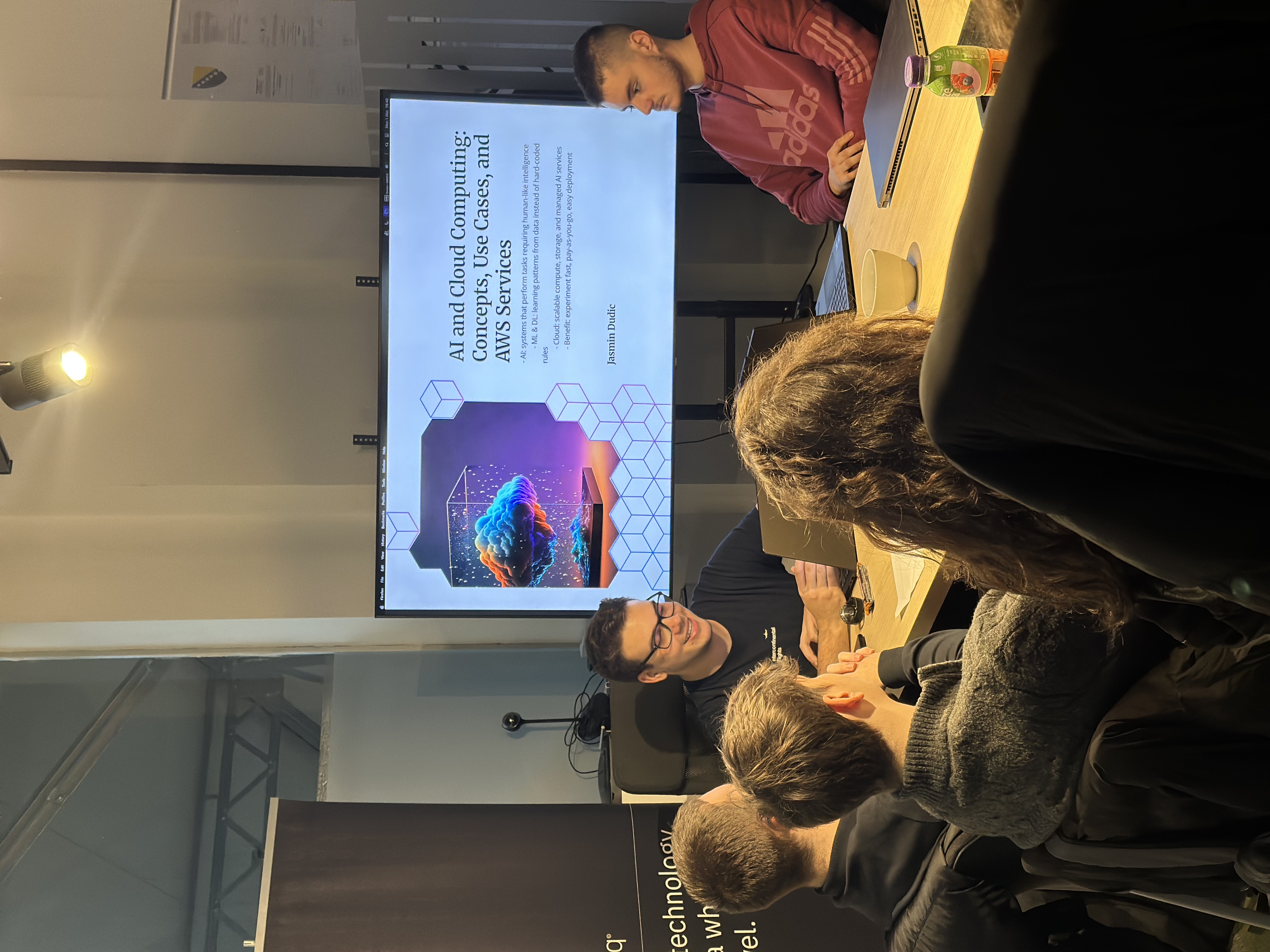
A total of 47 young people successfully completed the specialised training programs delivered through three thematic tracks: artificial intelligence, cloud computing and cybersecurity. Each programme was designed as a structured, specialised training course consisting of several thematic units and combining expert-led sessions, practical exercises and applied learning.
The artificial intelligence programme included four modules, while the cloud computing and cybersecurity programs were organised into three interconnected units each. This approach enabled participants to explore in greater depth the knowledge and tools relevant to specific areas of the digital economy.
One of the programme’s key strengths was that the curricula were developed in cooperation with practitioners, ensuring that the content reflected current technologies, tools and challenges in artificial intelligence, cloud computing and cybersecurity. For participants, this meant an opportunity to work on topics and approaches shaping today’s IT sector, rather than remaining limited to theoretical foundations. Such experience can provide them with a stronger starting point and greater confidence when pursuing their first professional opportunities. For companies, these programs also help expand the pool of young people whose knowledge is more closely aligned with current industry needs – a tangible value in a sector already experiencing a shortage of skilled professionals.
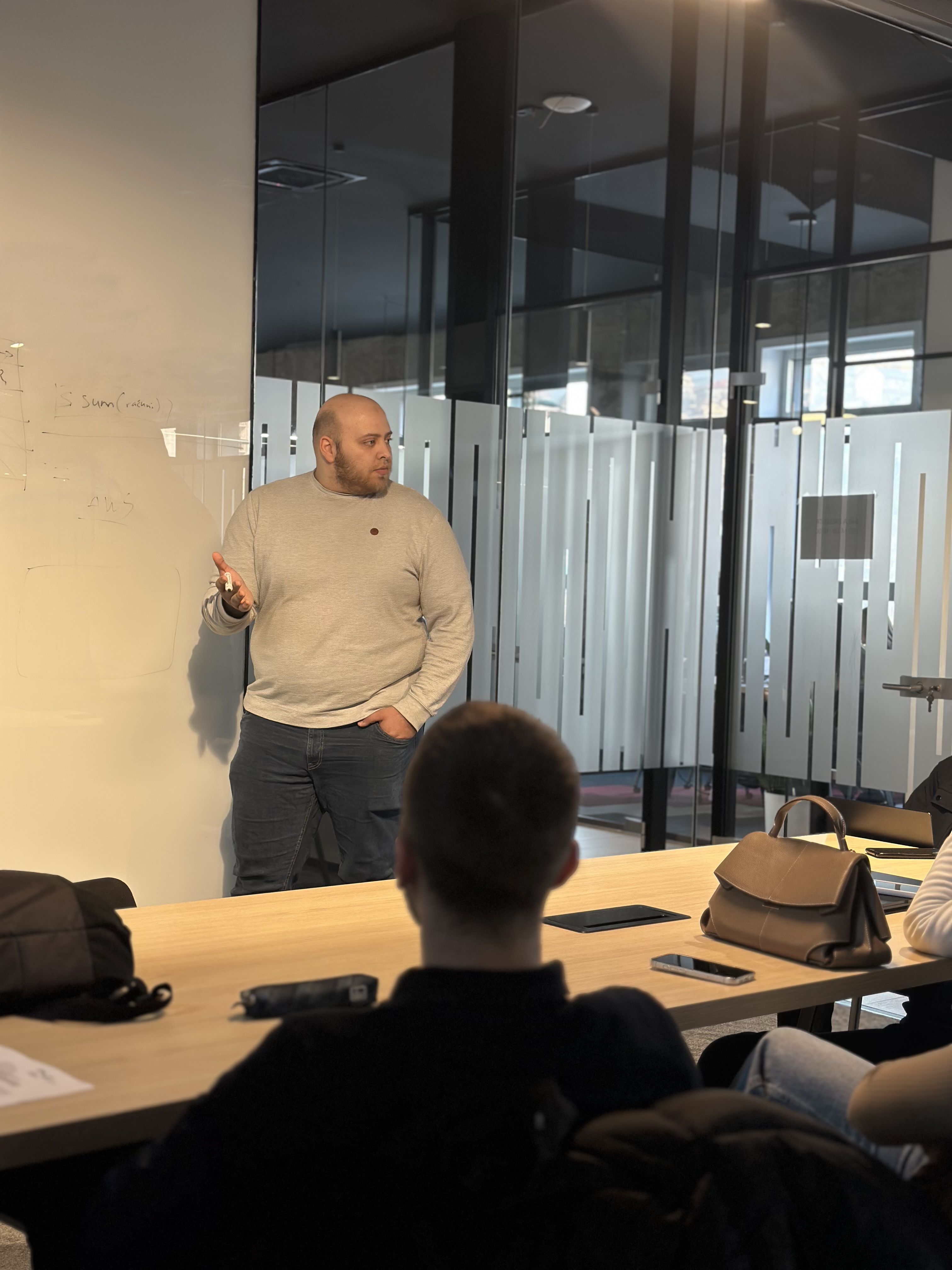
Khaled Elzayyt, one of the trainers engaged in the program, highlights that areas such as data work and cloud computing evolve faster than formal education curricula can keep pace with. For this reason, he believes it is important for young people to complement theiracademic foundation with opportunities to see how work is carried out in a production environment, where knowledge is not confined to theory but applied through concrete tools, processes and solutions. Based on his experience, it is precisely this combination of academic knowledge and practical work that enables participants to develop skills directly applicable in modern working environments, including companies operating in international markets.
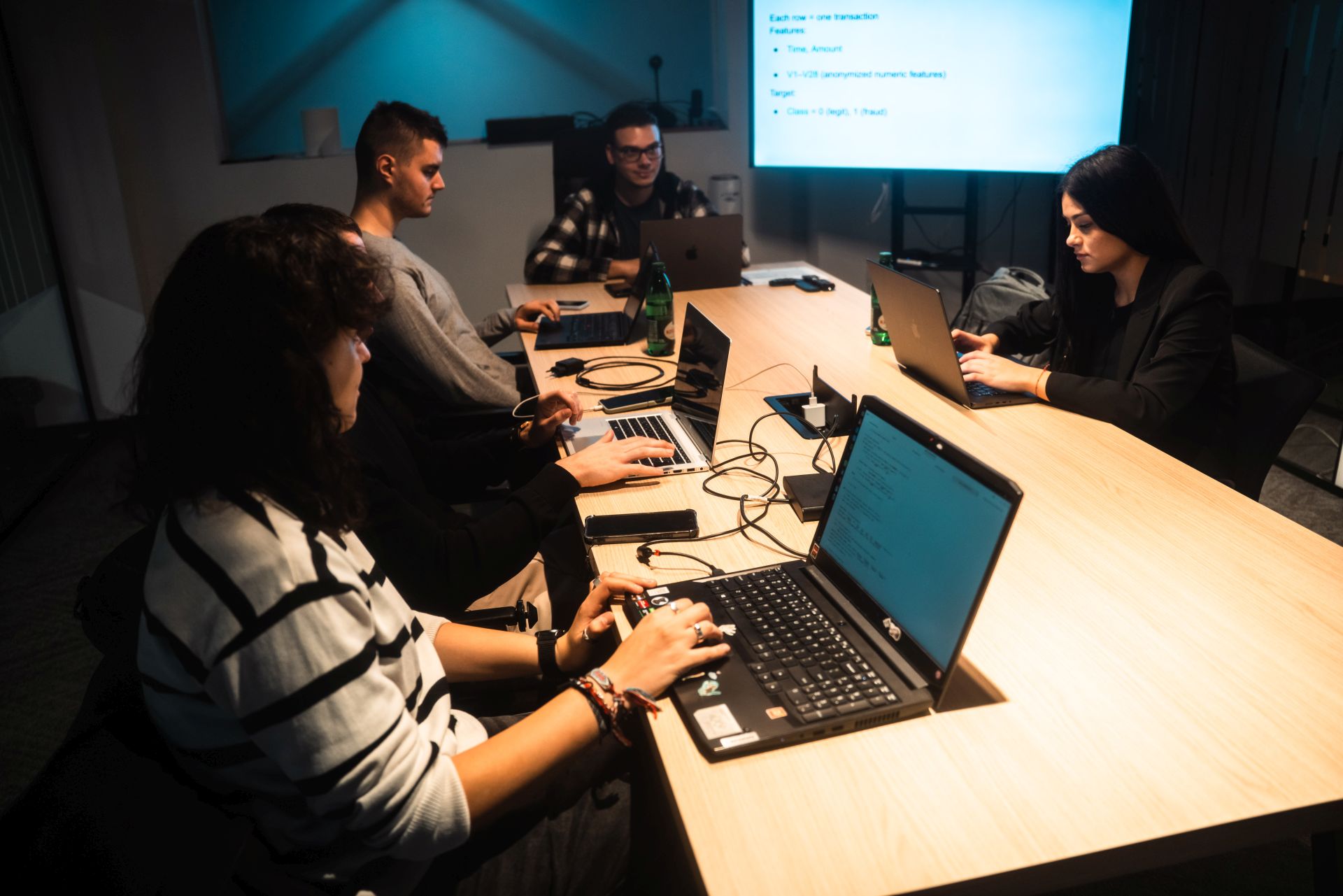
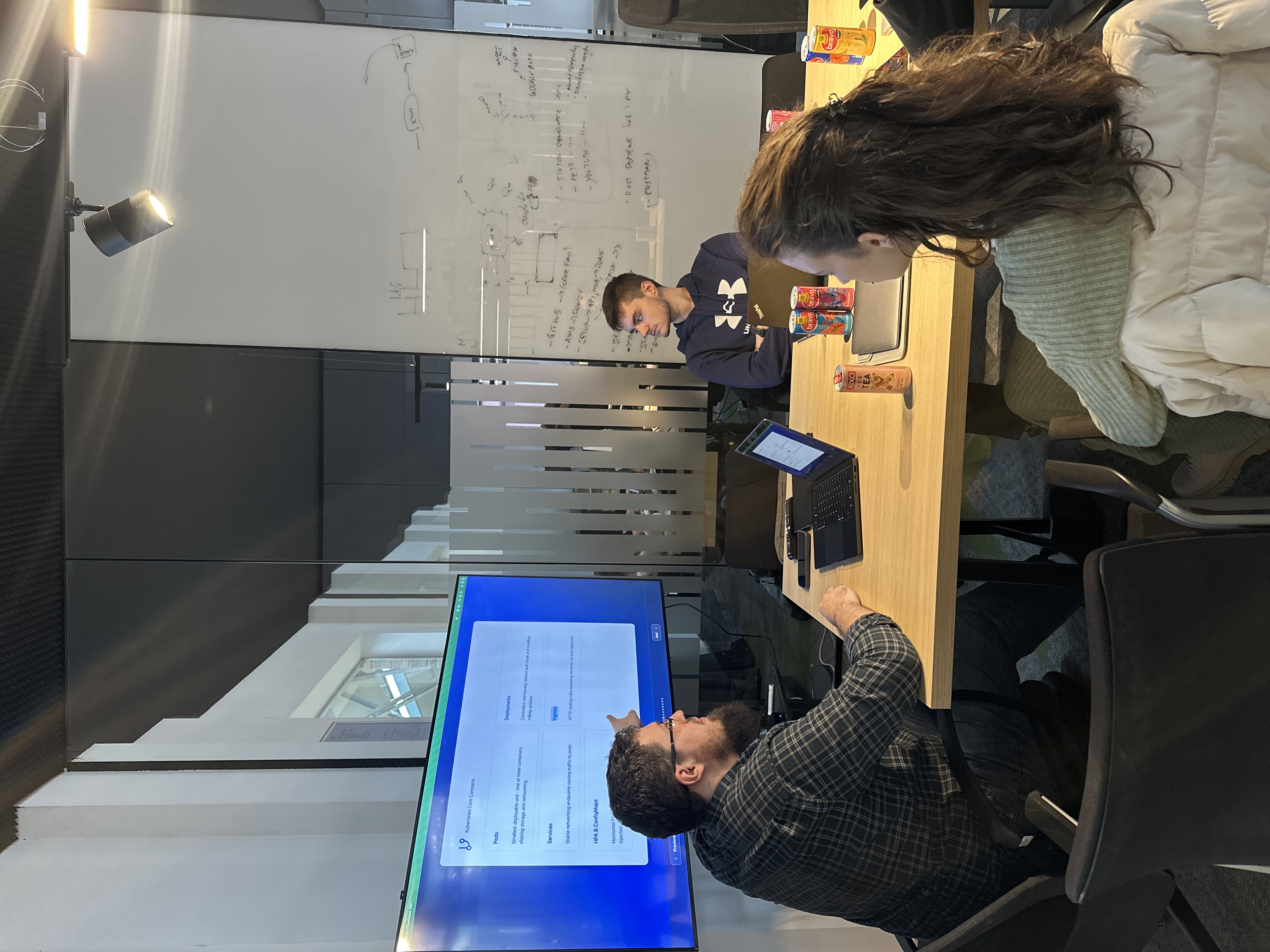
Practical work was an integral part of all three program tracks. Through exercises, assignments and mentoring support, participants had the opportunity to connect the knowledge they acquired with concrete digital solutions and real challenges, while gaining a clearer understanding of how contemporary digital tools are used in practice.
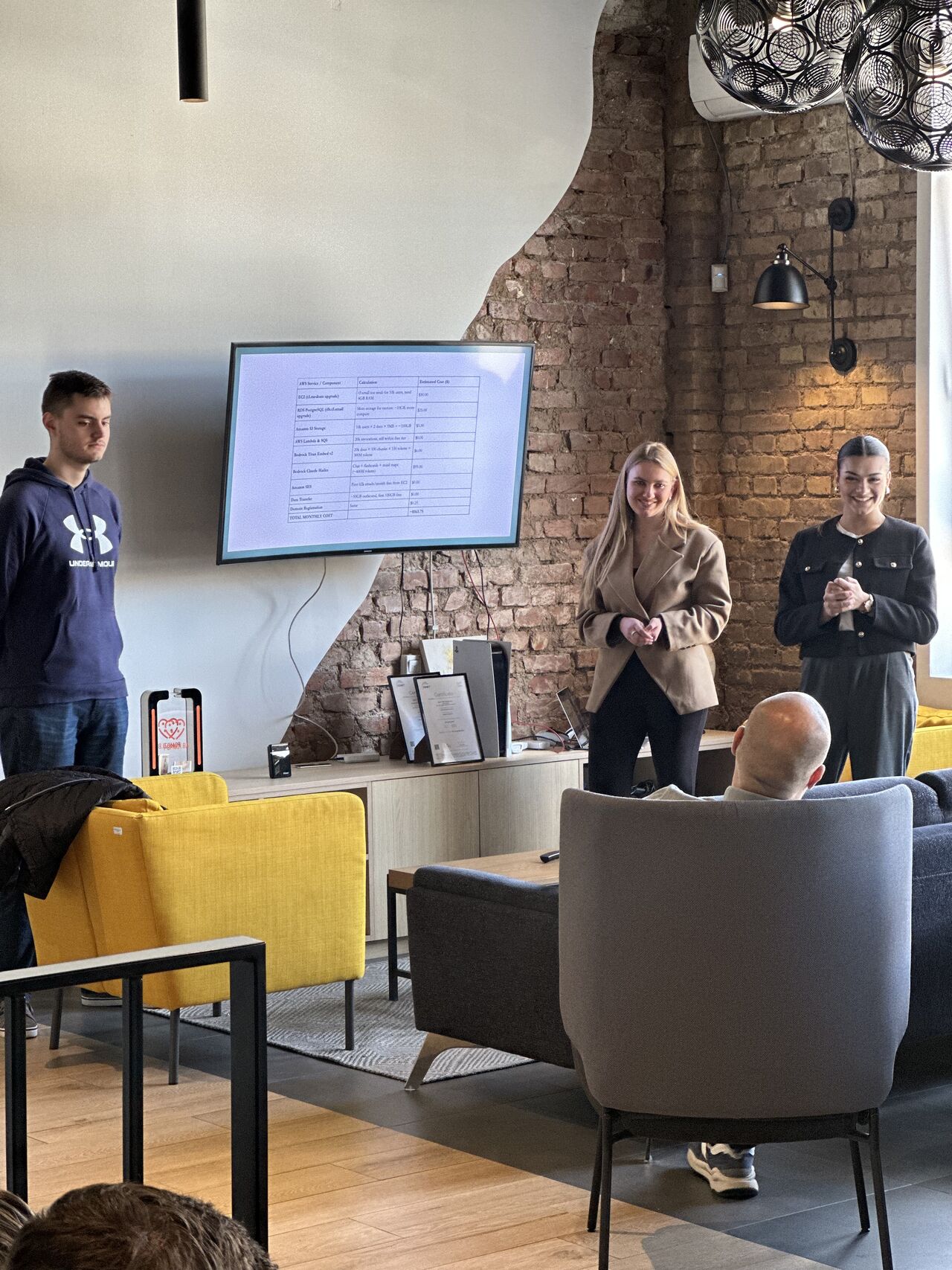
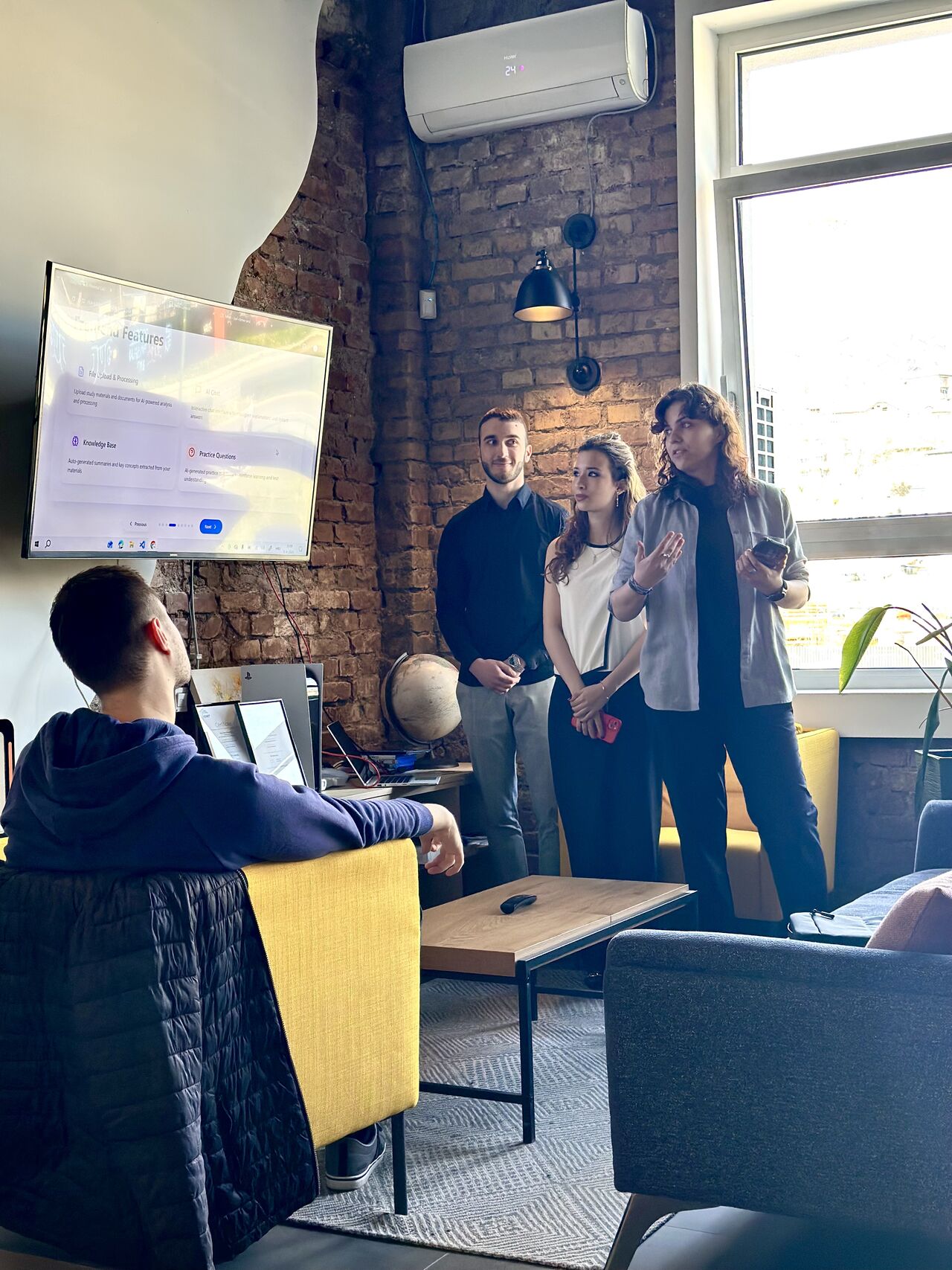
One example of this work is the AI Study Assistant application developed by participants. With mentoring support from experts, they combined content processing, AI services, secure access, data storage and multi-user collaboration in a cloud environment.
For Selma Karačić, one of the program participants, the value of the training lay in the opportunity to explore artificial intelligence, cloud computing and data work in greater depth and beyond a purely theoretical framework. Through practical work, she connected her knowledge of programming and analysis with concrete ways in which these skills can be applied in real digital solutions.
Benjamin Obarčanin had a similar experience, particularly highlighting work with cloud technologies and databases – knowledge used in the development of digital products, data work and cloud infrastructure. “Through the training, we worked practically with AWS cloud services and databases, which helped me better understand how these technologies are used in real digital solutions,” Obarčanin explains.
Ivica Lovrić, one of the experts engaged in the training programs, summarises the program’s intention: “The goal was not only to transfer theoretical knowledge, but to provide young people with an opportunity to develop the confidence and skills needed for real projects and challenges they will encounter in professional environments after completing their studies,” Lovrić stated.
Skills That Remain and Opportunities That Open Up
The value of such training programs is not measured solely by the number of modules delivered or courses completed. For 47 young people, they represented an opportunity to complement their academic knowledge with practical skills linked to current technologies and ways of working – experience that can provide a more secure foundation for their first professional opportunities and further career development.
The training content developed and the experience gained through delivery provide a basis for similar programs to be continued, further developed and adapted to the changing needs of the digital economy. The value of FutureMinds Lab also lies in demonstrating how the connection between education and the labour market can be strengthened through content that follows developments in the field, engagement with experts and learning through practice.
Investing in digital skills is therefore more than support for individual careers. It means building a broader pool of young people who can respond to the needs of a growing sector, contribute to innovation and actively participate in the digital transformation of Bosnia and Herzegovina.