


Why Health Studies in Radiological Technology
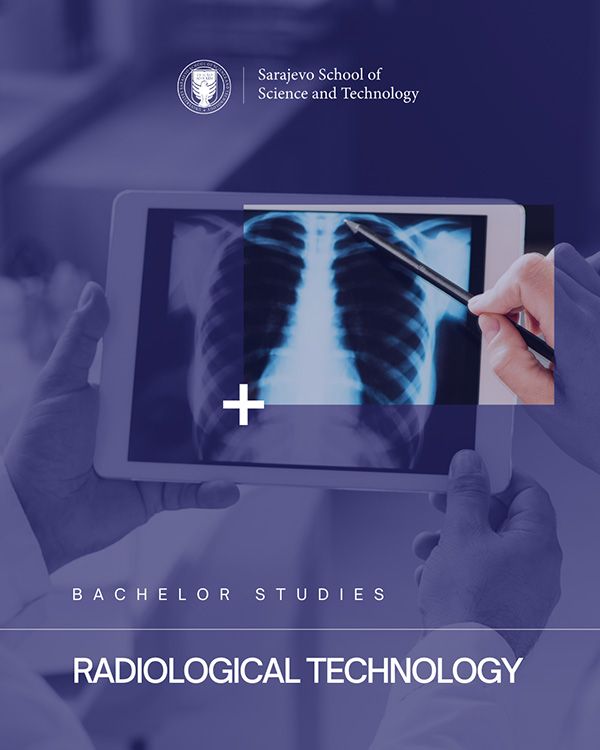
The Bachelor Programme in Radiological Technology at Sarajevo Medical School, University SSST, is designed to respond to the growing need for highly skilled professionals in diagnostic imaging, treatment and radiological technologies. As medical imaging becomes central to modern healthcare, the demand for welltrained experts continues to increase both locally and internationally. The programme, as a first-cycle academic degree, provides students with comprehensive knowledge of medical imaging, radiological therapeutic and diagnostic techniques, and patientcentered care through a combination of theoretical instruction and practical training. Teaching is delivered by experienced academic staff, as well as clinical and industry professionals, ensuring exposure to real-world applications and modern radiological practice.
Why Health Studies in Radiological Technology Medical imaging includes: X-ray imaging Computed tomography (CT) Magnetic resonance imaging (MRI) Ultrasound and other diagnostic modalities In medical radiology, the following aspects are essential: accuracy and quality of diagnostic imaging patient safety and radiation protection proper use of advanced imaging technologies contribution to clinical decision-making efficiency and optimization of diagnostic procedures integration within multidisciplinary healthcare teams
Dean's message
Responding to the rapid advancement of medical imaging technologies, the growing demand for highly skilled radiology professionals, and the increasing importance of precision diagnostics in modern healthcare, Sarajevo Medical School has launched the Bachelor Programme in Radiological Technology. This programme is designed to equip students with comprehensive theoretical knowledge and practical competencies in diagnostic imaging, radiological techniques, and patient-centered care. In addition, it places strong emphasis on radiation protection and safety, as well as the application of radiological technologies in areas such as radiation oncology, interventional radiology procedures, and nuclear medicine. Through this integrated approach, graduates are prepared for professional roles within contemporary healthcare systems and multidisciplinary clinical environments.