



FUTUREMINDS LAB: From Ideas to Innovation for a Sustainable Transition
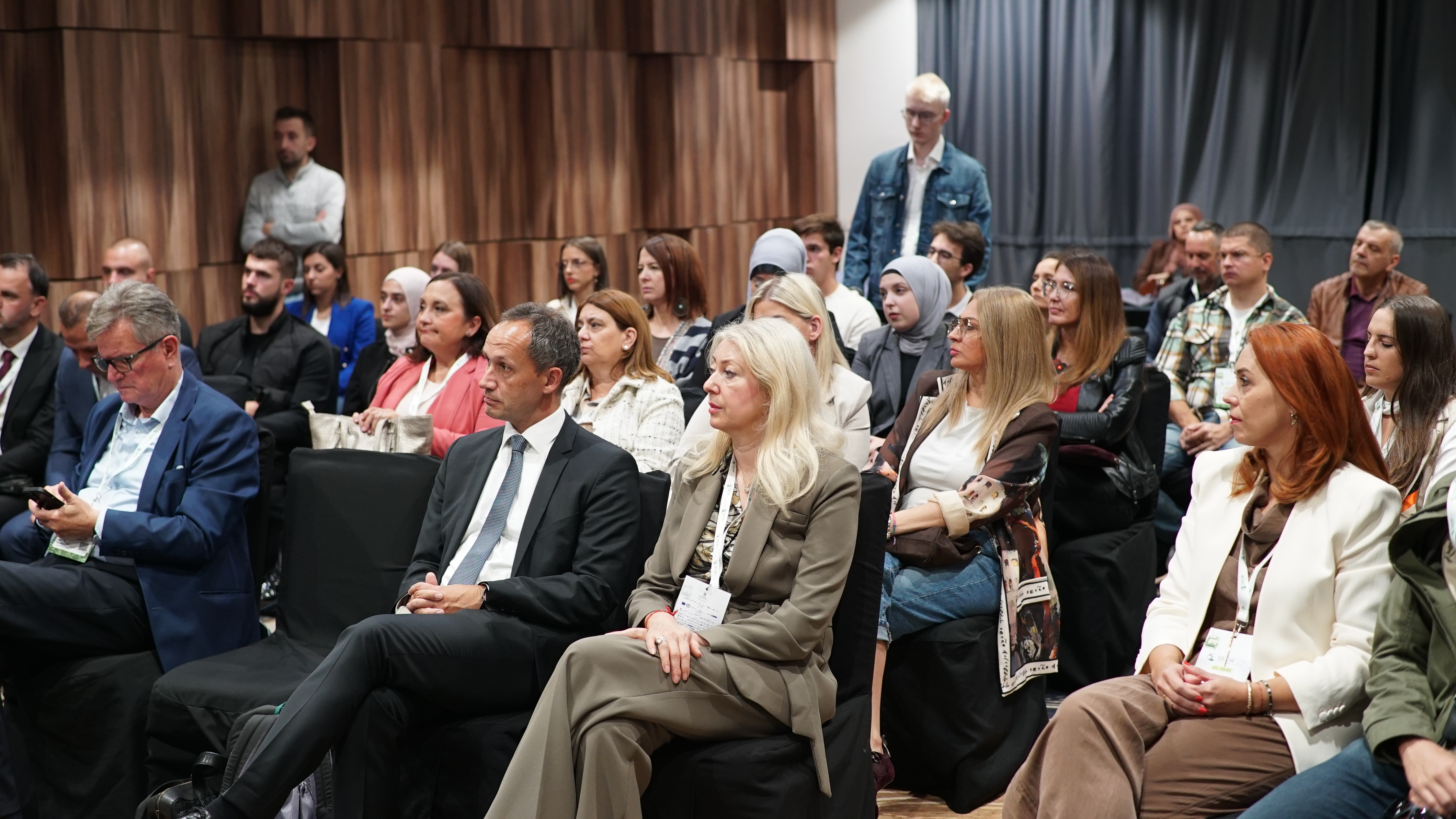
And what role does collaboration between academia, industry and institutions play in this process? These were the key questions at the heart of the FutureMinds Lab final event, which brought together representatives of the private sector, innovation support organisations and academia.
The FutureMinds Lab project was implemented by the Sarajevo School of Science and Technology (SSST) within the framework of the EU initiative for private sector development in Bosnia and Herzegovina (EU4PSD), co-funded by the European Union and the German Federal Ministry for Economic Cooperation and Development (BMZ), and implemented by GIZ. The project activities built on the results previously achieved by SSST through the its4health Digital Innovation Hub.
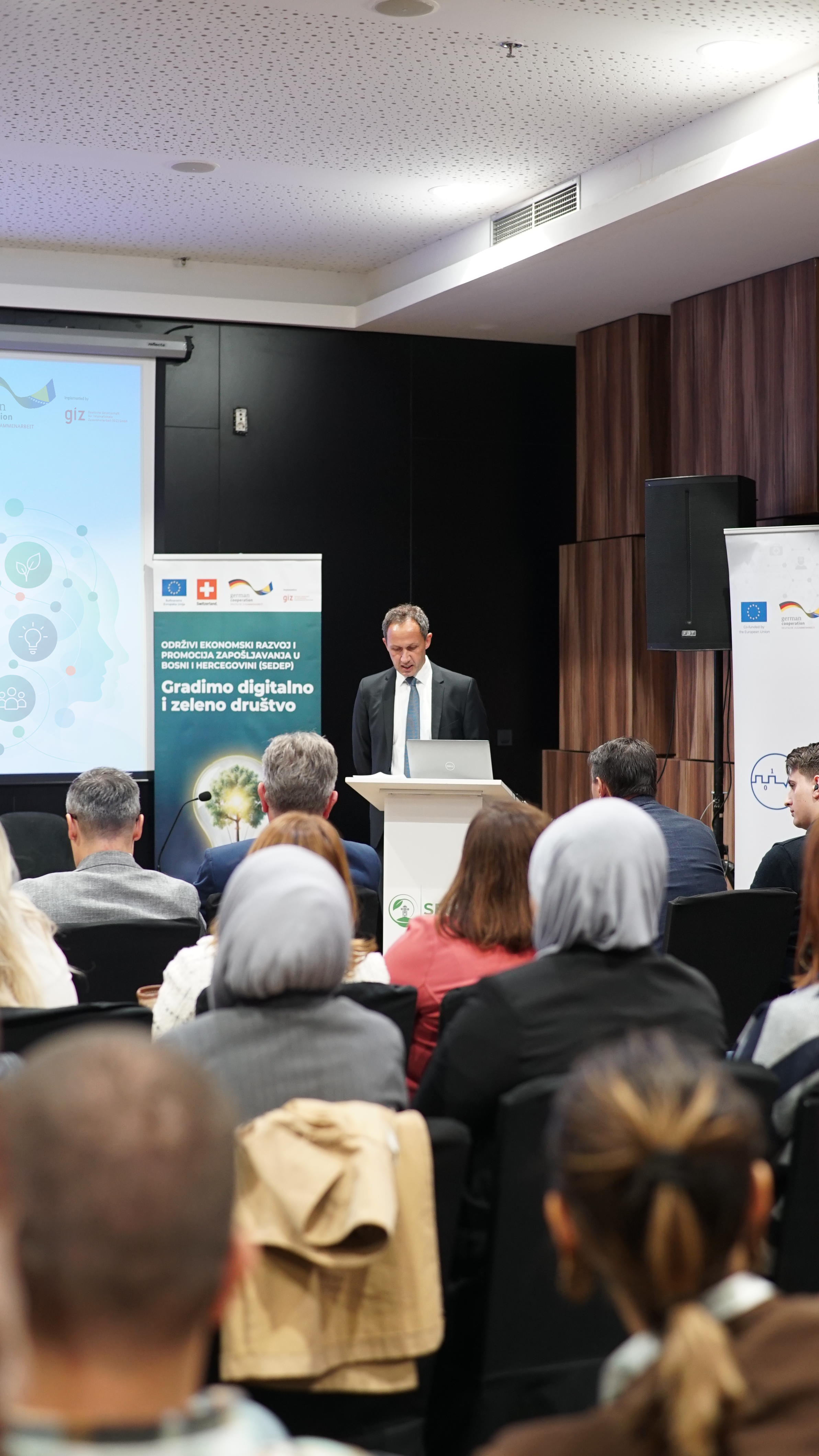
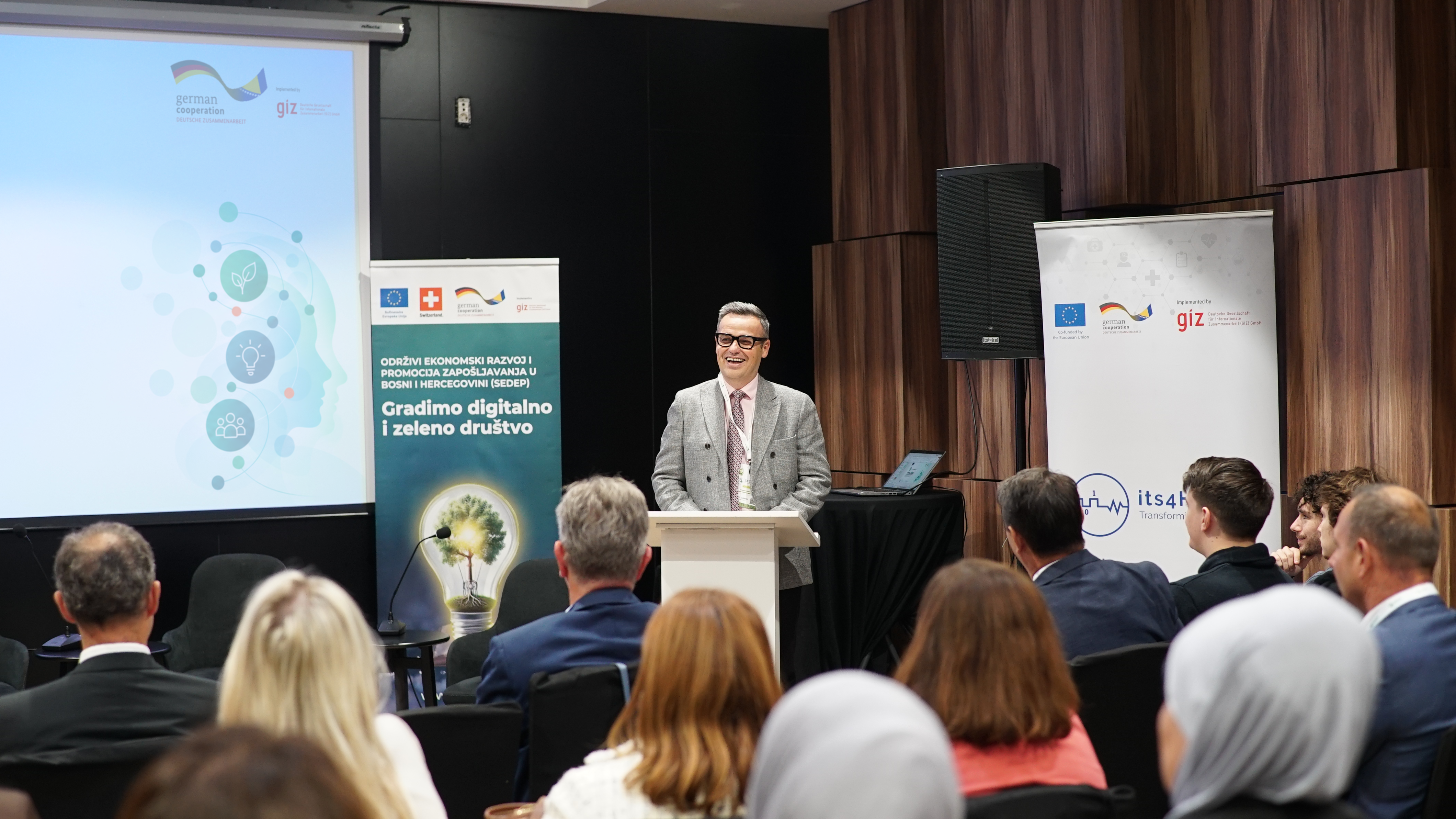
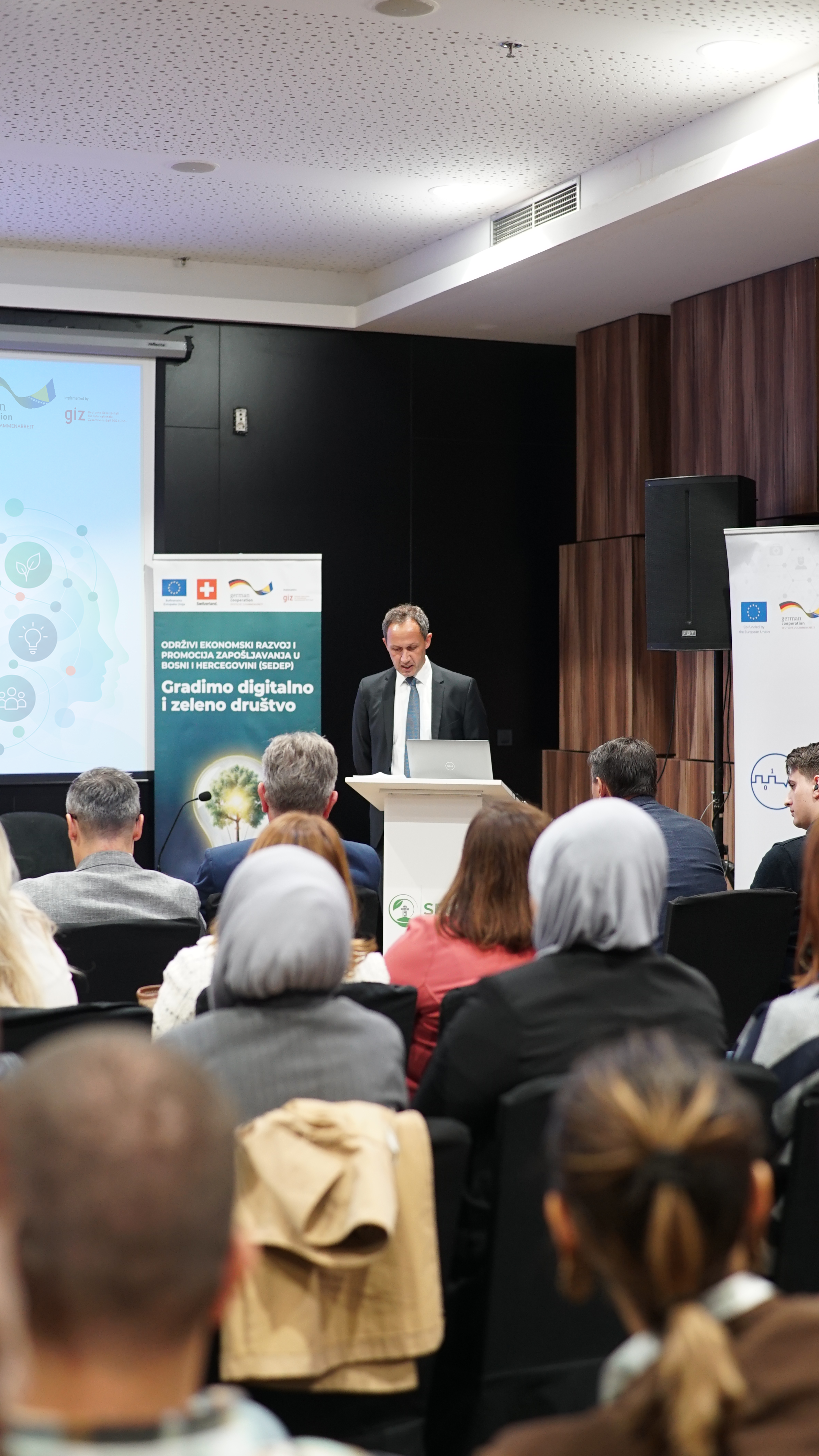
The event, entitled “From Ideas to Green Impact: Building an Innovation Ecosystem for Sustainable Transition,” was organised by SSST as part of Sarajevo Energy and Climate Week 2026. Participants were addressed by Jens Elsner, Program Manager of the “Sustainable Economic Development and Employment Promotion” (SEDEP) program at GIZ BiH, while Prof. Dr. Nedim Čelebić, Key Expert of the FutureMinds Lab project, presented an overview of the project and its key achievements.
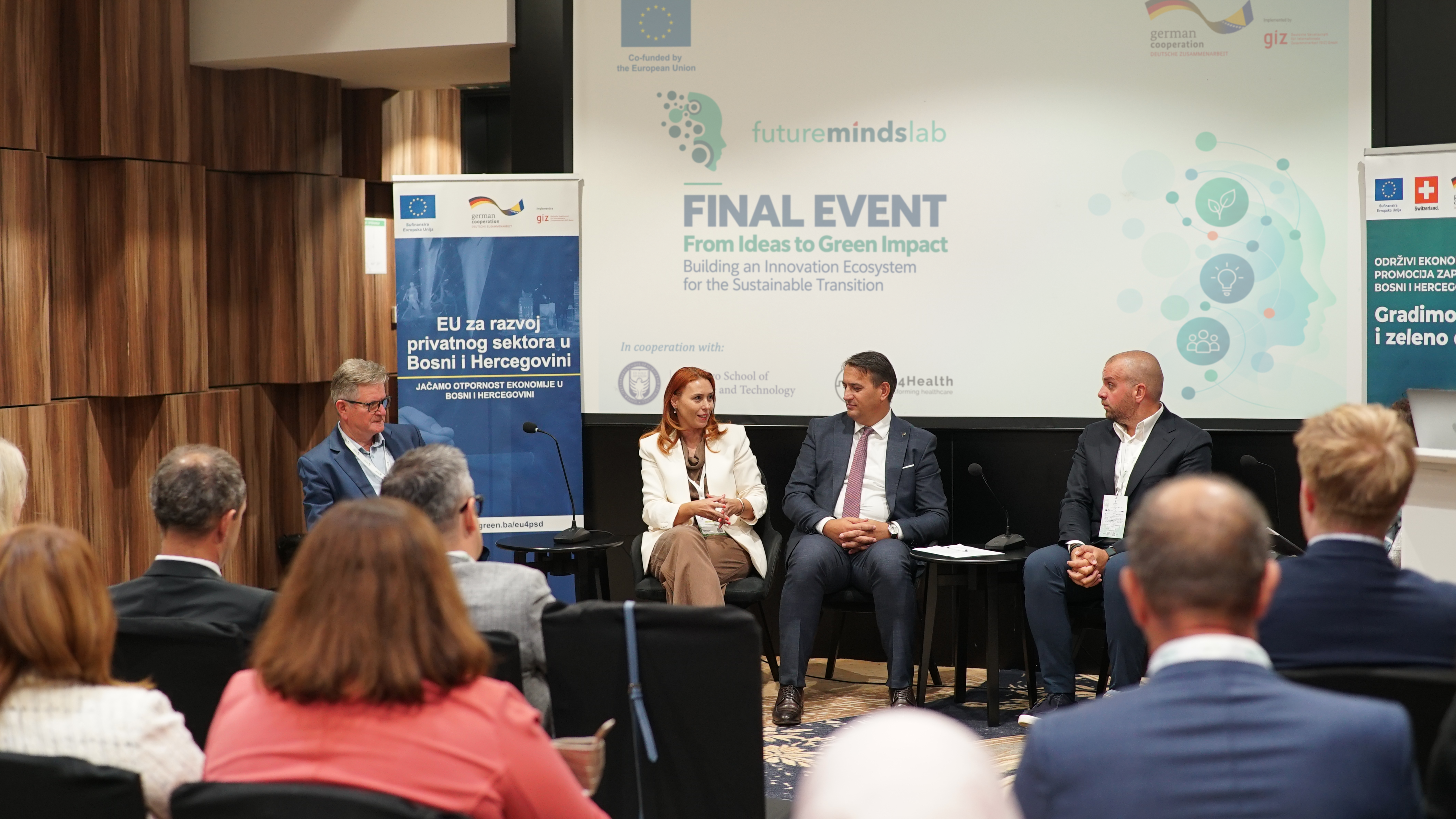
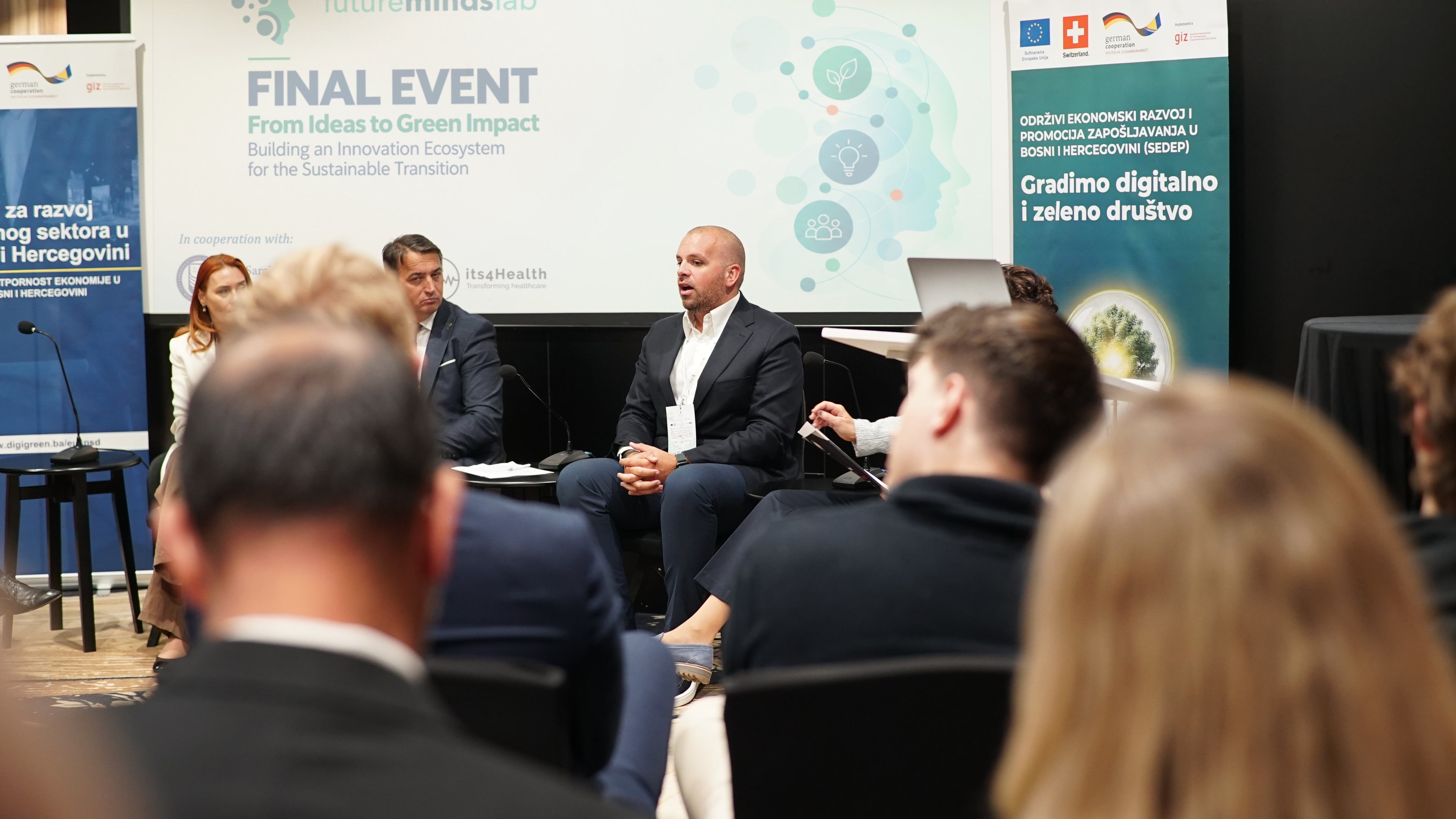
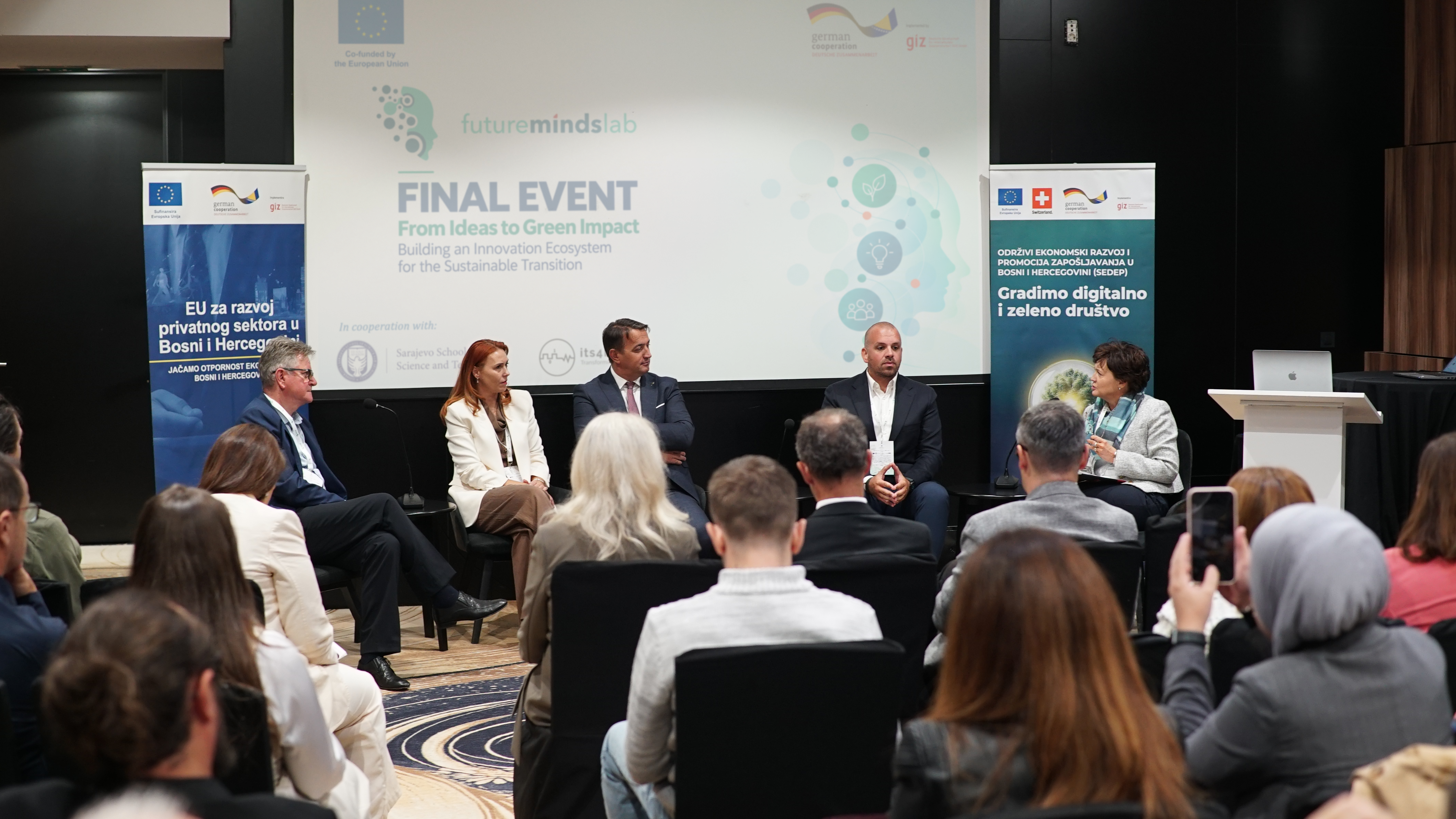
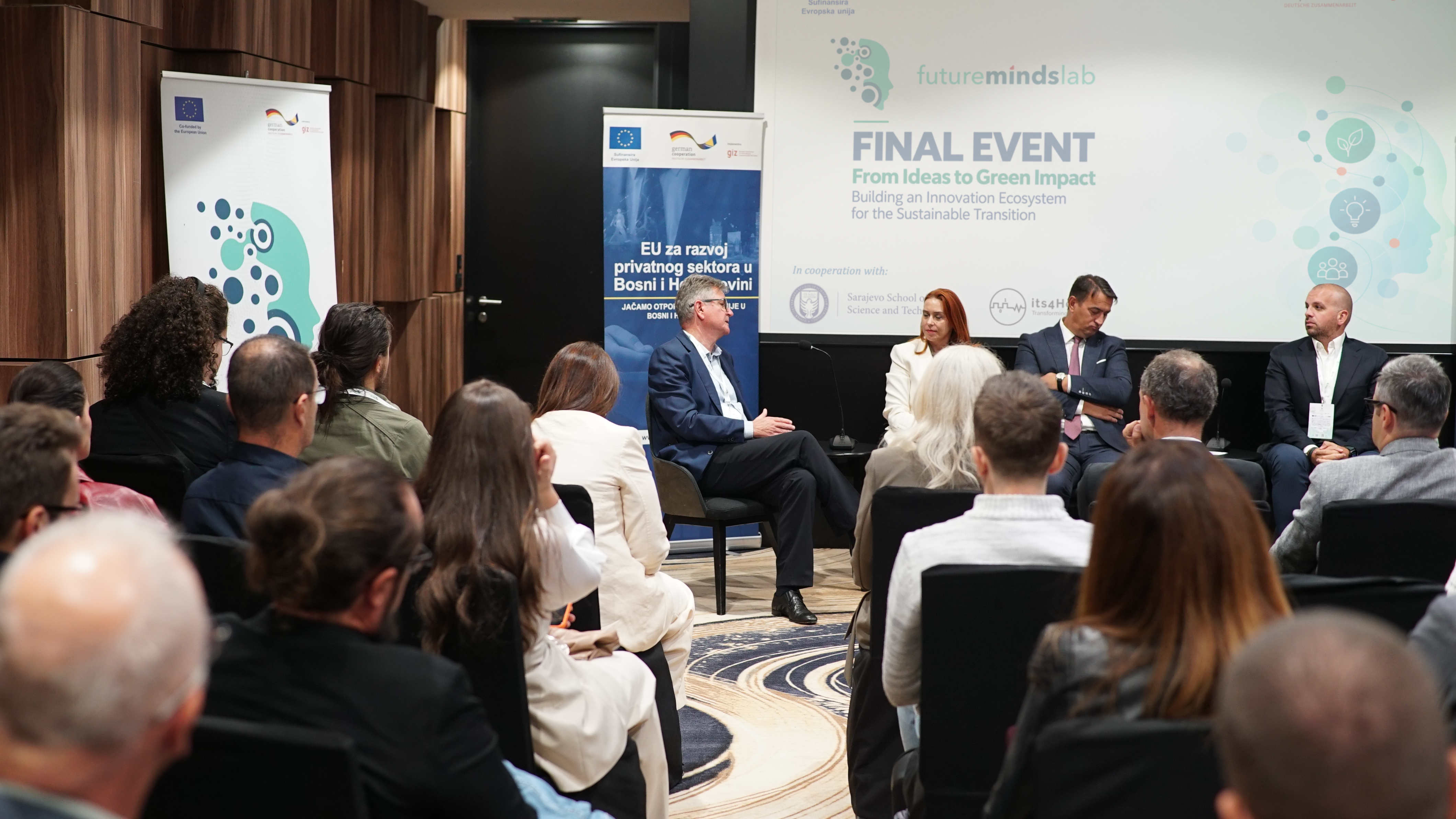
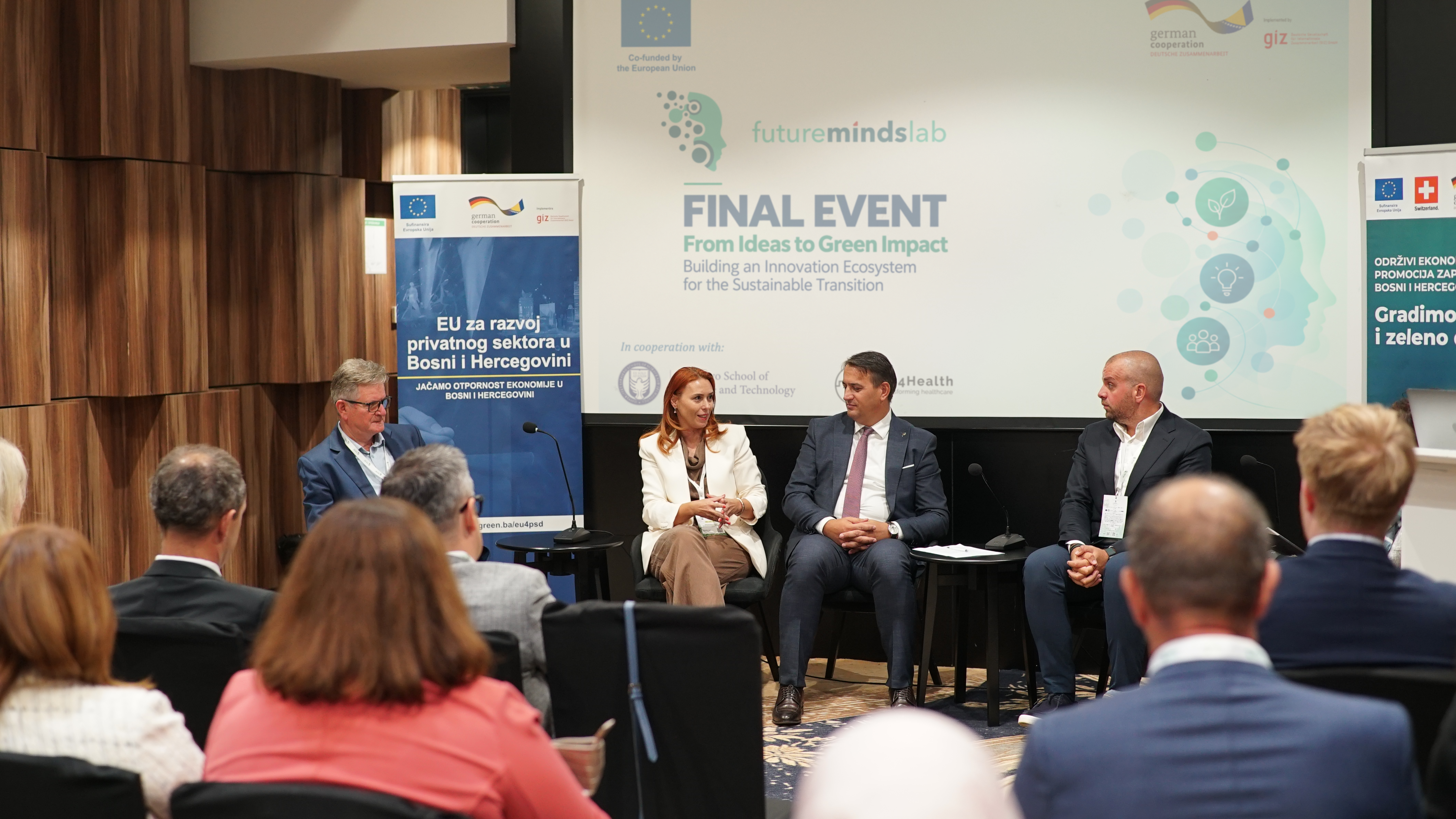
The concluding panel discussion explored the development of Bosnia and Herzegovina’s innovation ecosystem, the application of green and digital innovations in industry, and the support needed by small and medium-sized enterprises and innovators on their journey from idea to market. Through its activities, FutureMinds Lab addressed these very challenges – from identifying the needs of businesses and developing skills to testing and implementing concrete solutions.
From identifying business needs to developing concrete solutions
Recognising that innovation support must respond to the actual challenges faced by local businesses, the project conducted an assessment of the innovation ecosystem for innovative entrepreneurship in Bosnia and Herzegovina, as well as three value chain needs assessments covering the wood and metal industries, tourism and healthcare sectors. These studies provided the foundation for activities aimed at strengthening the innovation capacities of small and medium-sized enterprises and developing concrete forms of support tailored to their business needs.
One of the project’s key results was the development and implementation of three service lines for SMEs: Access to Finance, Access to Intellectual Property Protection, and Access to R&D Infrastructure. The service lines were implemented through individual support provided to 25 small and medium-sized enterprises.
BAM 100,000 investment fund for the development of innovative products
Through three parallel hackathons organised as part of the project, 78 young innovators worked on solving concrete challenges in the wood and metal industries, tourism and healthcare sectors. However, the objective went beyond simply developing ideas and selecting winners. Through a BAM 100,000 investment fund dedicated to product design and development, combined with mentoring and technical support, three selected concepts were developed into functional products, tested and integrated into real business environments.
The resulting solutions included ErgoShift, an innovative solution developed in cooperation with Inside by Ećo; SmartBed AI, a digital solution for optimising hospital capacity, tested at ASA Hospital; and CHILLIM, an interactive application implemented at the immersive museum Planet Sarajevo.
In this way, the hackathons went beyond serving as a space for generating ideas: the selected concepts were given the opportunity to progress from initial solutions to testing and implementation in real-world business environments.
More than 300 secondary school students from across Bosnia and Herzegovina participated in the Youth Entrepreneurship Academy
An important segment of the project focused on developing the next generation of innovators and professionals, with particular emphasis on entrepreneurial and digital skills.
Through the Youth Entrepreneurship Academy, implemented in cooperation with 16 secondary schools across three cantons, more than 300 students had the opportunity to develop an entrepreneurial mindset, explore their own business ideas and learn about the opportunities offered by innovation and emerging technologies. At the same time, 47 young people completed specialised training in artificial intelligence, cloud computing and cybersecurity, while 25 participants took part in a multi-module program on innovative entrepreneurship.
The project also developed an interactive entrepreneurship learning platform that uses elements of gamification and artificial intelligence to help young people better understand the process of developing business ideas and acquiring entrepreneurial knowledge.
From innovative ideas to sustainable transition: What kind of innovation ecosystem does Bosnia and Herzegovina need?
How can we create an environment in which innovative ideas can grow into market-ready, sustainable solutions and contribute to the green and digital transition? This question was at the centre of the final panel discussion, which brought together representatives of industry, academia and innovation support organisations.
The discussion featured Professor Emeritus Mirza Kušljugić from the University of Tuzla and expert at the RESET Centre for Sustainable Energy Transition; Armin Durmišević, Director of e387; Suhad Ećo, Founder and Director of Inside by Ećo; and Dr. Daria Ler, EIT Community Officer for Bosnia and Herzegovina. The panel was moderated by Prof. Dr. Jasna Hivziefendić, Dean of the Faculty of Computer Science at SSST.
The discussion explored how green and digital innovations can contribute to the competitiveness of local businesses and help them adapt to the requirements of the sustainable transition, while also addressing the barriers that make it more difficult for innovators and companies to move from an idea to its practical application in the market.
Particular attention was given to what is needed for an innovation to move from development to real-world implementation – from access to finance and mentoring to specialised expertise and research and development infrastructure. The discussion also addressed talent development and the need to better connect young people’s knowledge and skills with real challenges faced by industry, as well as ways to enable successful solutions to achieve further growth and wider application.
Through its activities, FutureMinds Lab demonstrated how different elements of an innovation ecosystem can be connected in practice – from understanding business needs and developing talent to providing expert and financial support and enabling the testing and implementation of new solutions.
The final event therefore also opened a broader discussion on how such models can become more accessible and sustainable, enabling innovation to make a stronger contribution to the competitiveness of businesses and to the green and digital transition of Bosnia and Herzegovina.
Read more
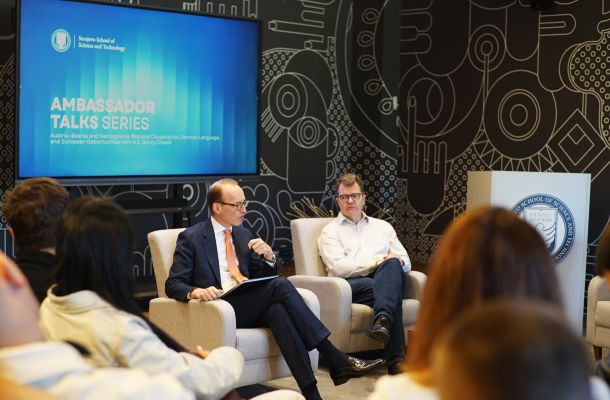
Ambassadors Talk: Austrian Ambassador H.E. Georg Diwald Visits University SSST
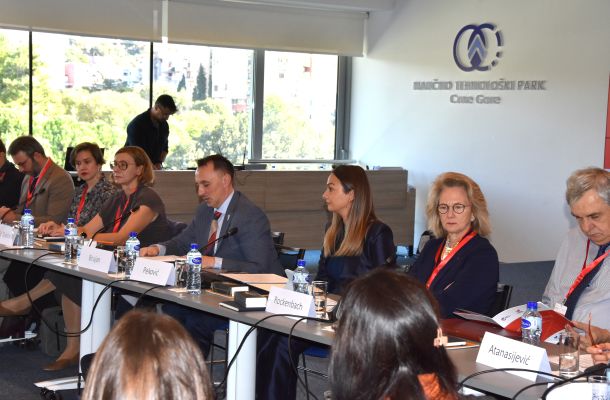
SSST Professor Jasminka Hasić-Telalović Represents Bosnia and Herzegovina at the 10th Berlin Process Joint Science Conference