



GREEN INNOVATION HACKATHON: FROM CHALLENGE TO CONCEPT
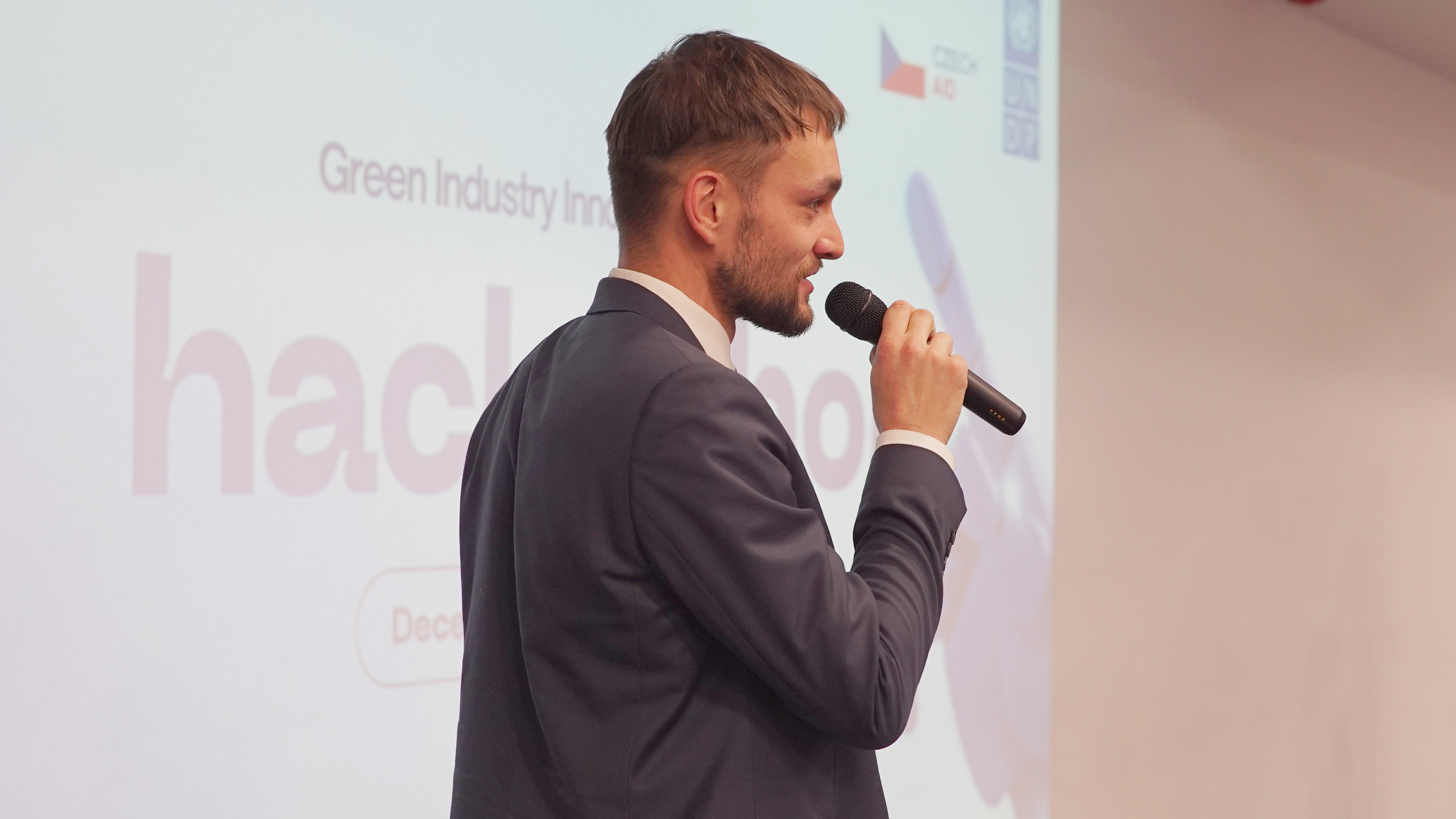
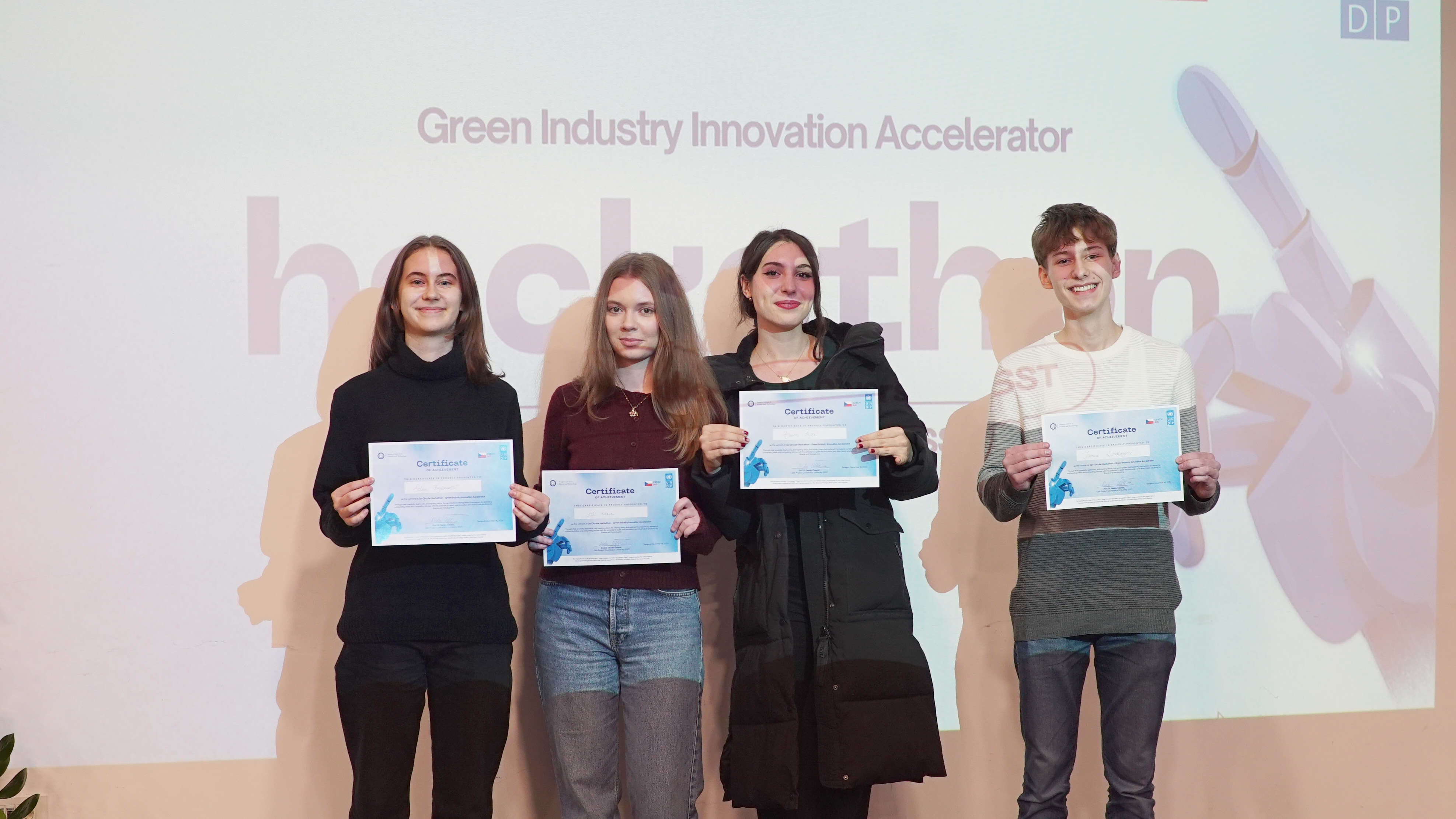
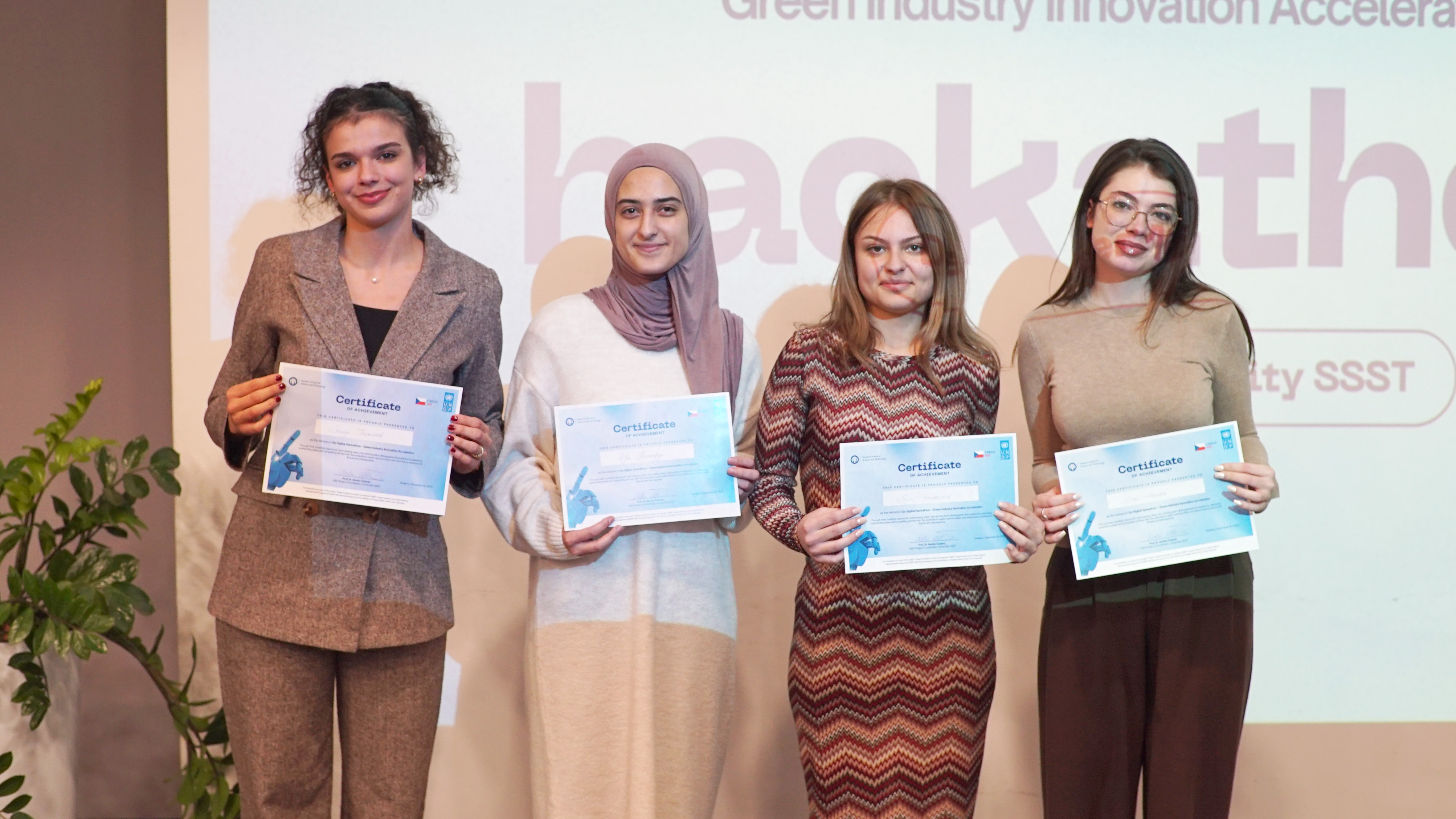
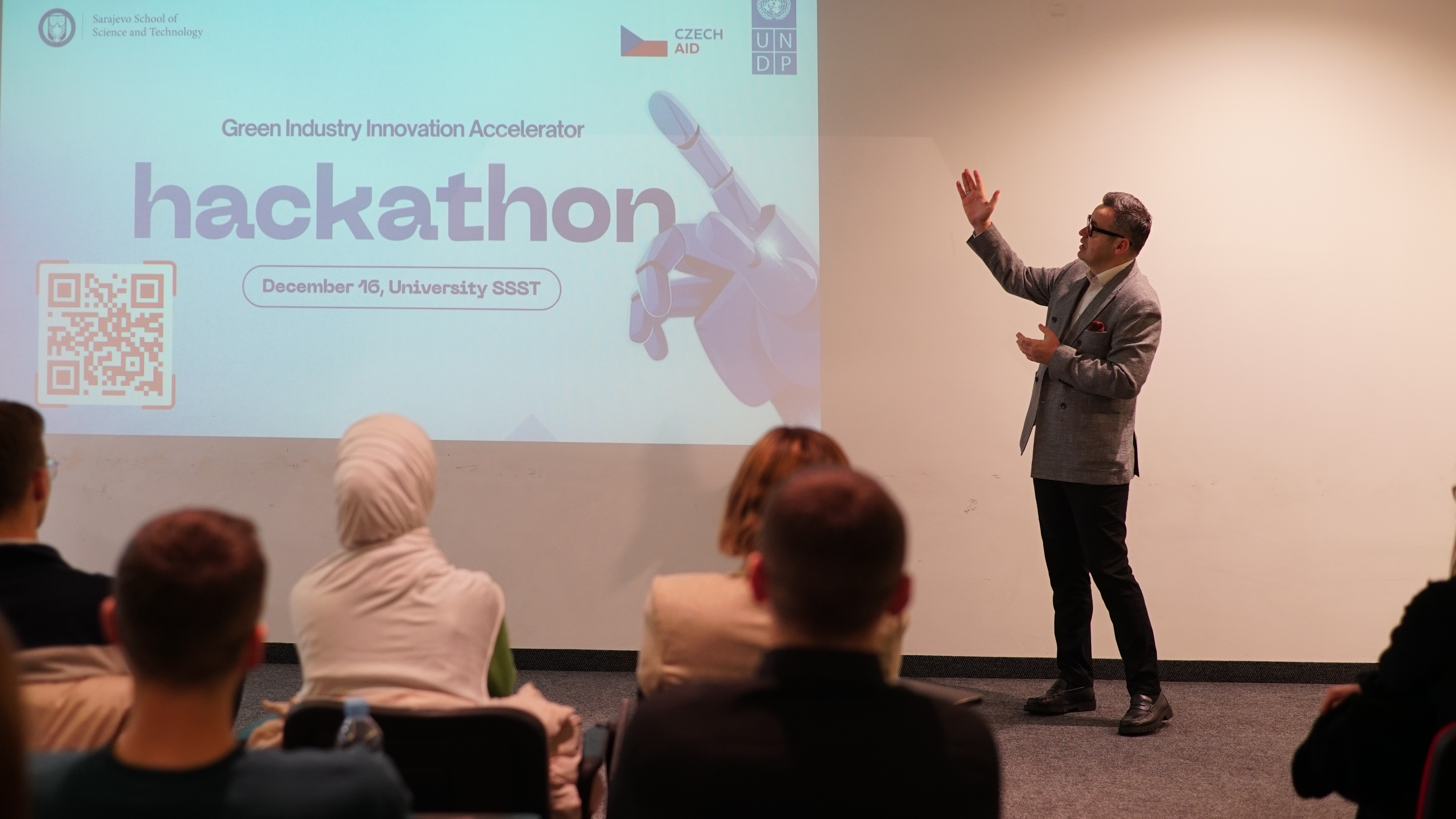
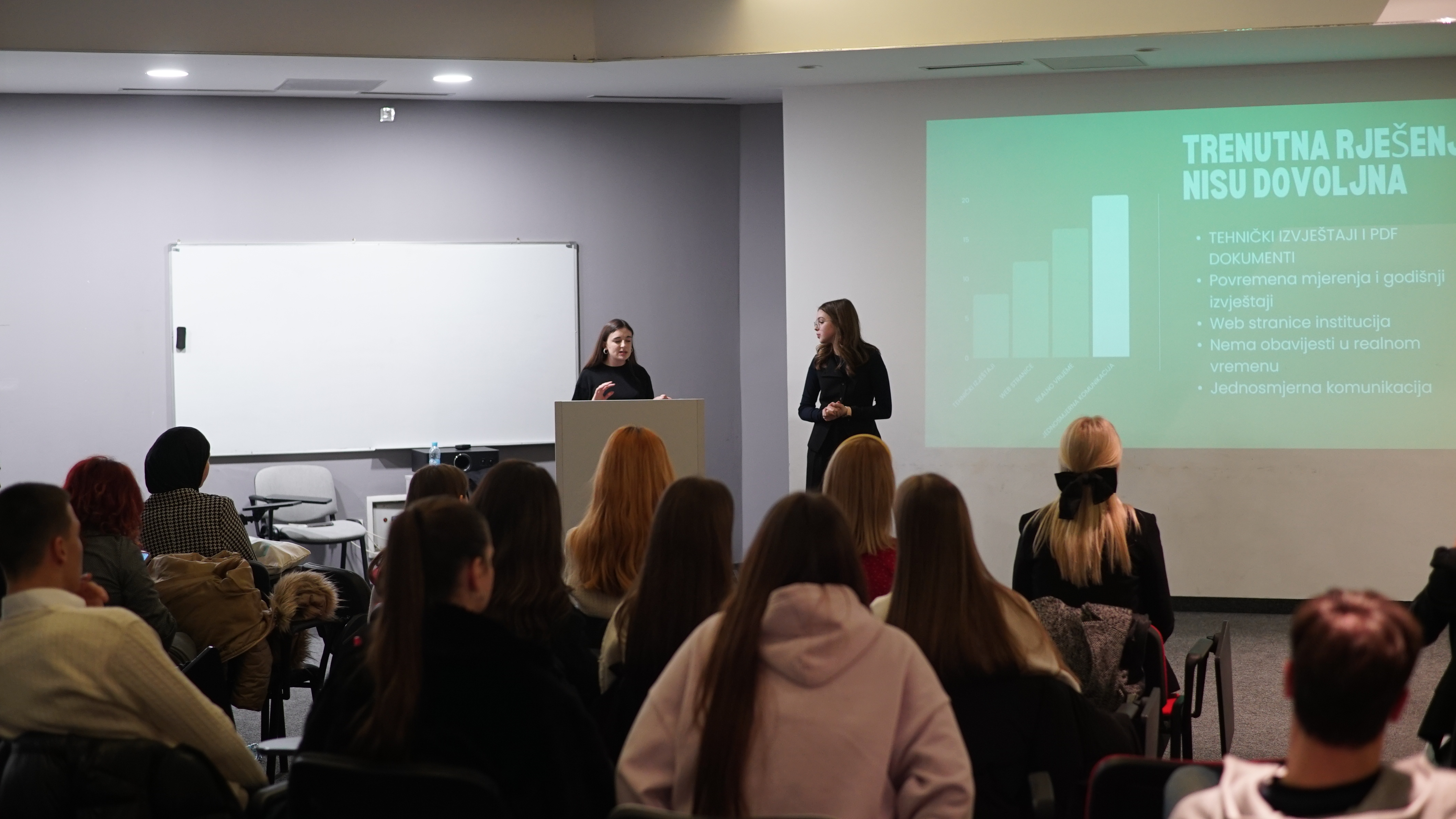
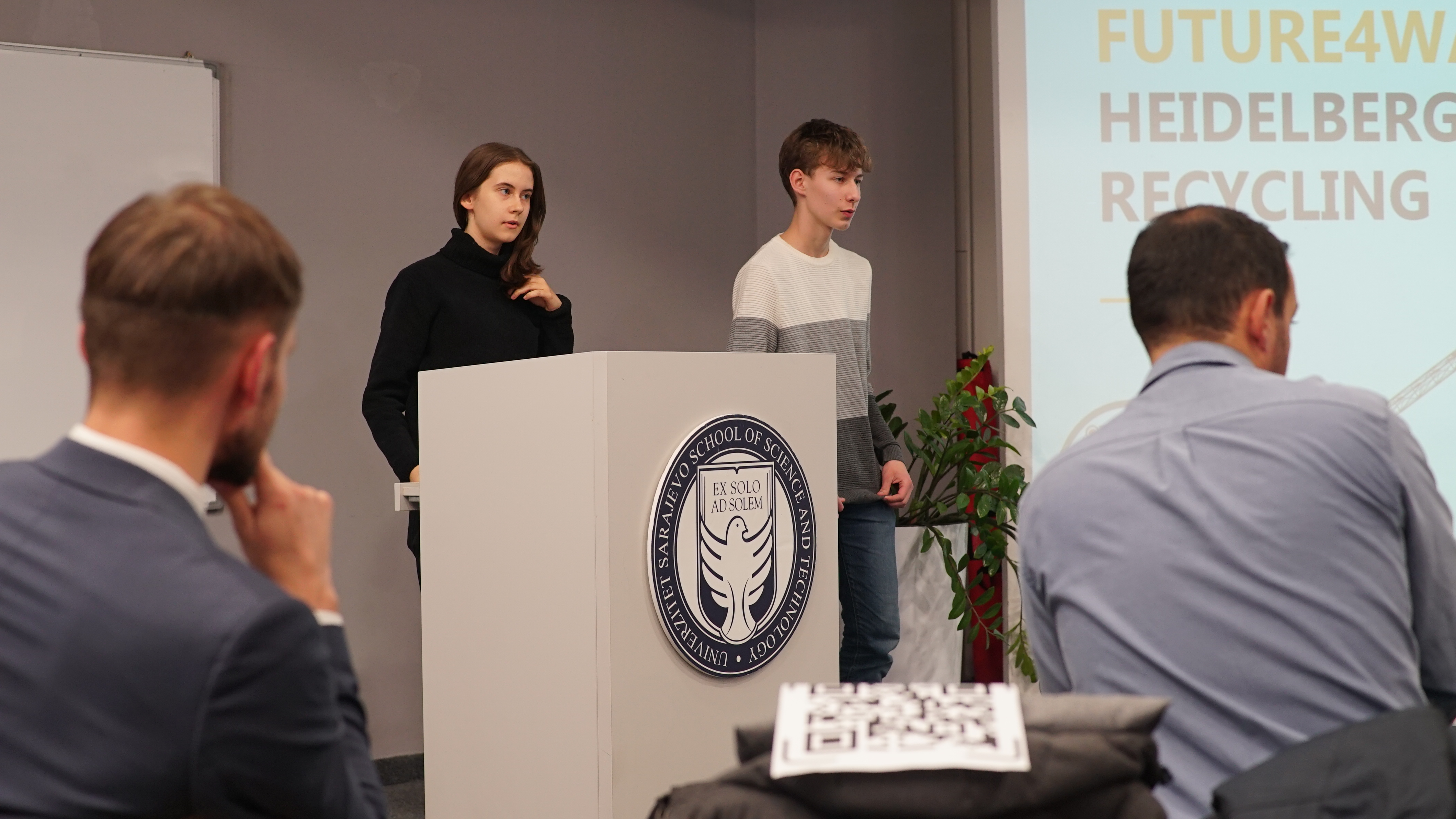
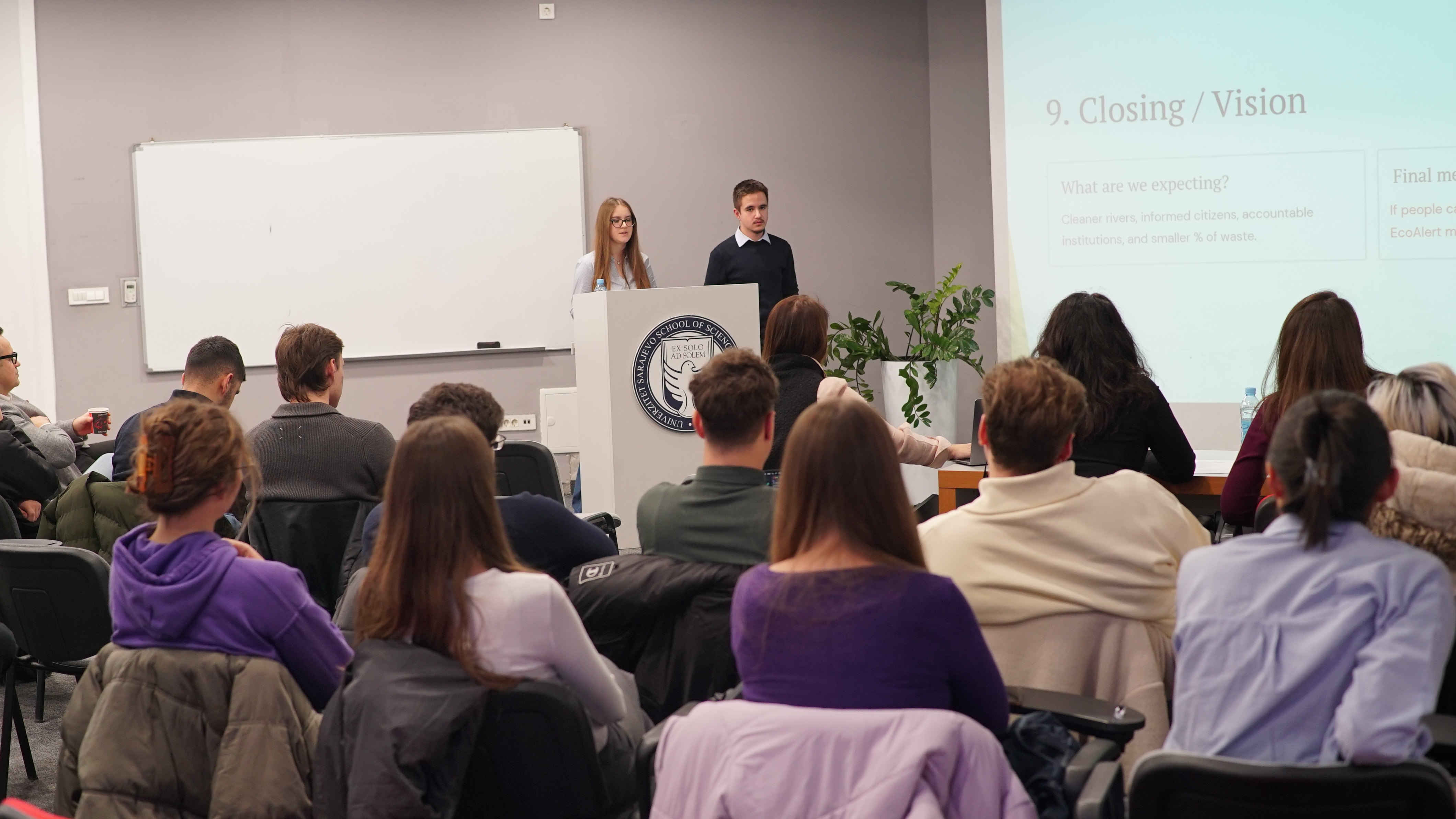
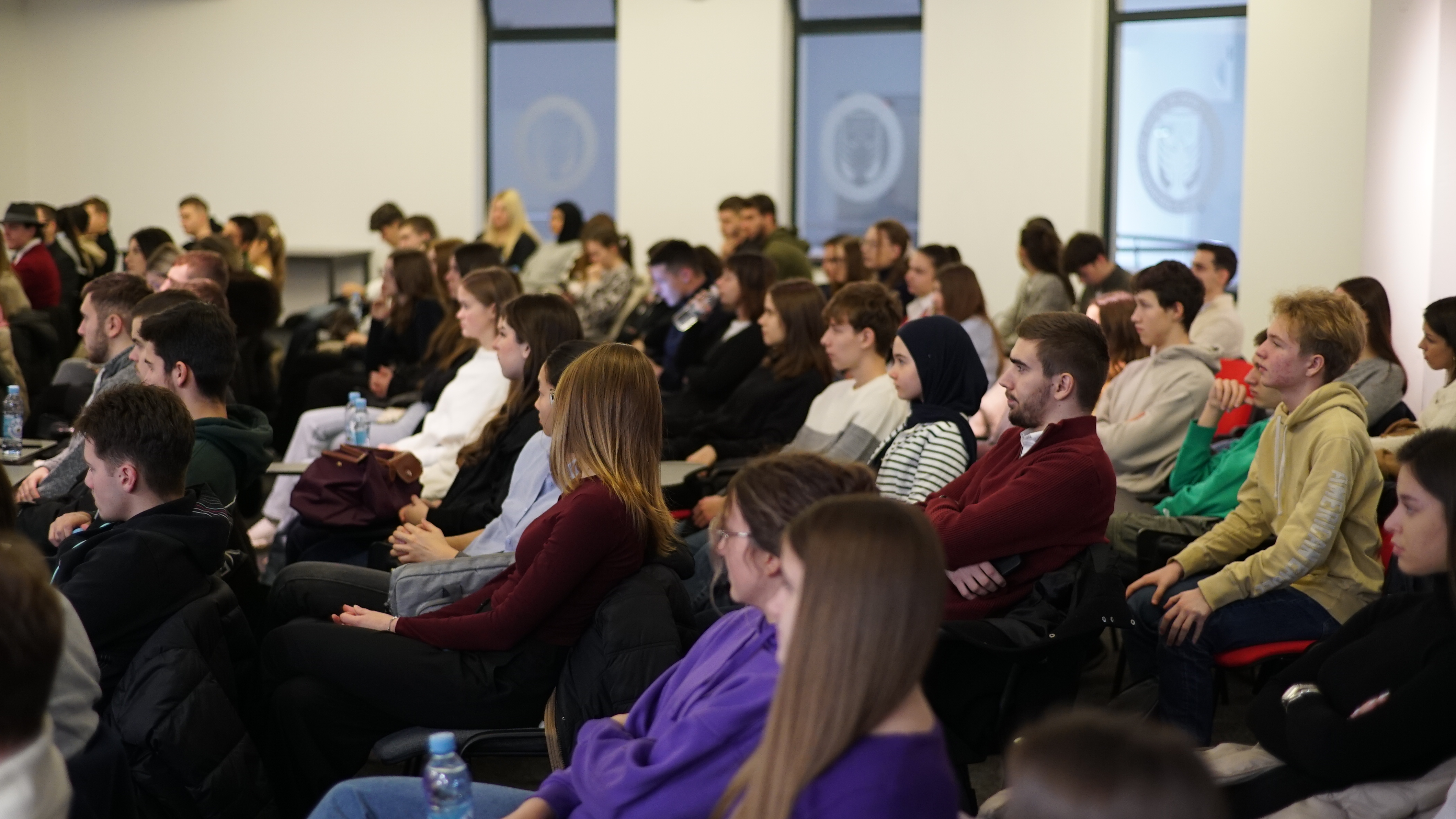
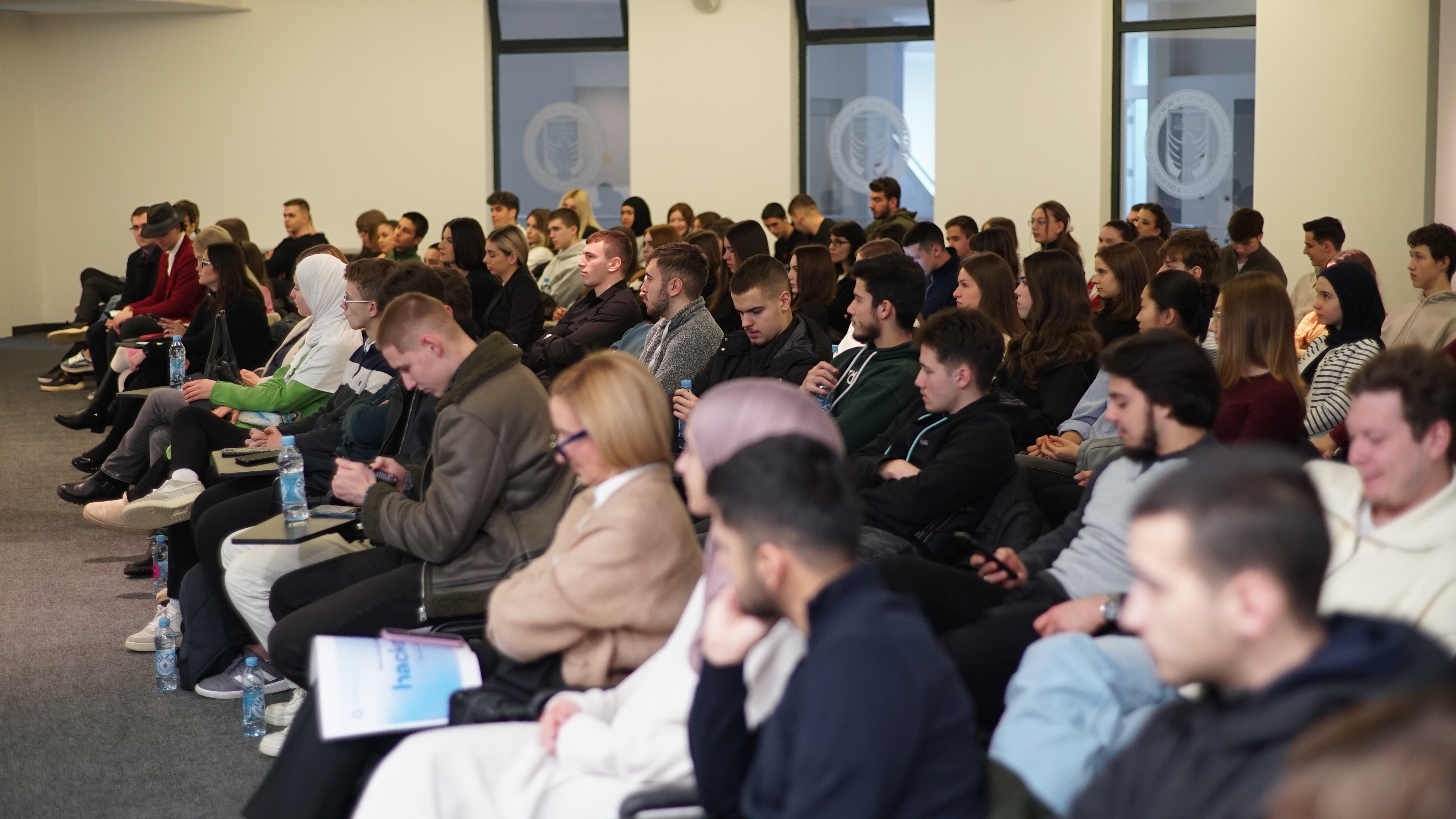
The Green Innovation Hackathon, organized within the framework of the Green Industry Innovation Accelerator (GIIA), brought together young innovators, mentors, academics and industry experts for an intensive day of collaboration and problem-solving at the University SSST.
This hackathon is part of the Green Industry Innovation Accelerator (GIIA), implemented by the United Nations Development Programme (UNDP) through the Czech Challenge Fund, with the financial support of the Ministry of Foreign Affairs of the Czech Republic. The overall objective of the project is to support Bosnia and Herzegovina’s green transition by strengthening innovation capacities, fostering collaboration between youth and industry, and translating sustainability challenges into practical, market-relevant solutions.
Focused themes rooted in real industry needs
Building on an in-depth assessment of the construction materials value chain, the hackathon focused on three thematic areas critical to sustainable industrial transformation. These included the digitalization of the green value chain, with an emphasis on tools that enhance transparency, enable CO₂ tracking, and support logistics optimization and resource efficiency; circular economy approaches and concrete recycling, encouraging the reuse, repurposing and retention of materials within closed-loop systems; and solutions addressing the broader links between industry, health, communities and environmental sustainability.
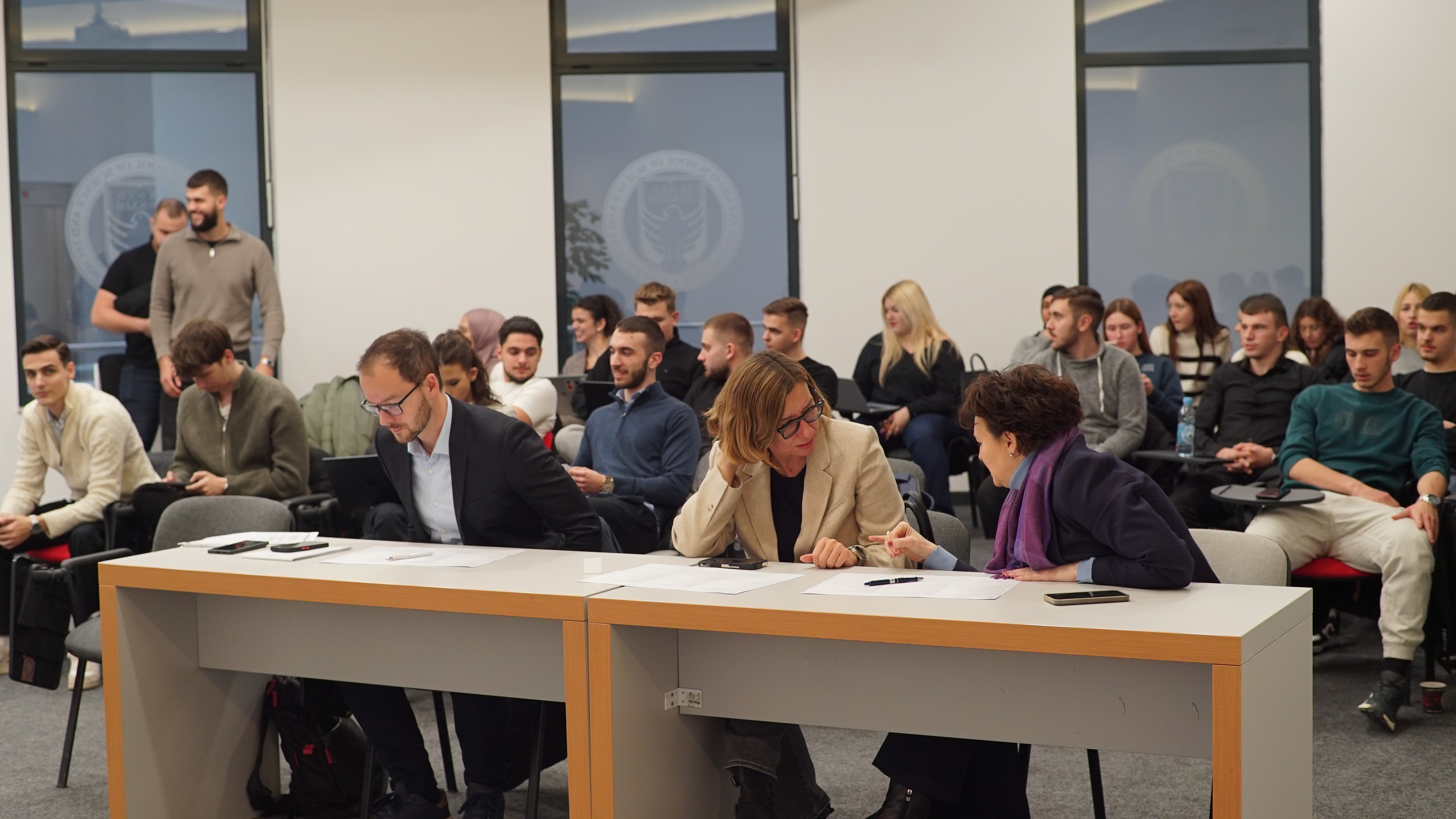
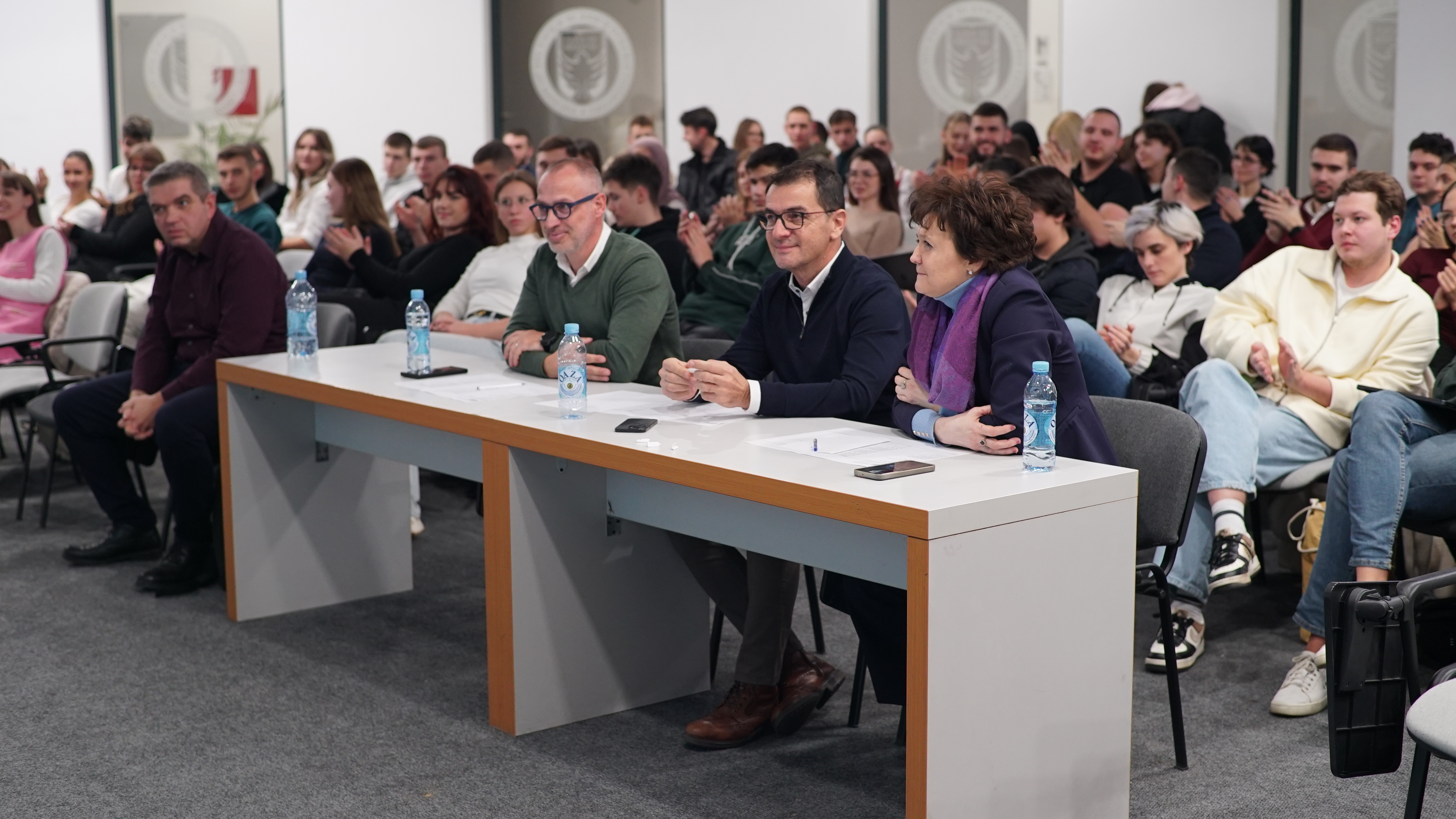
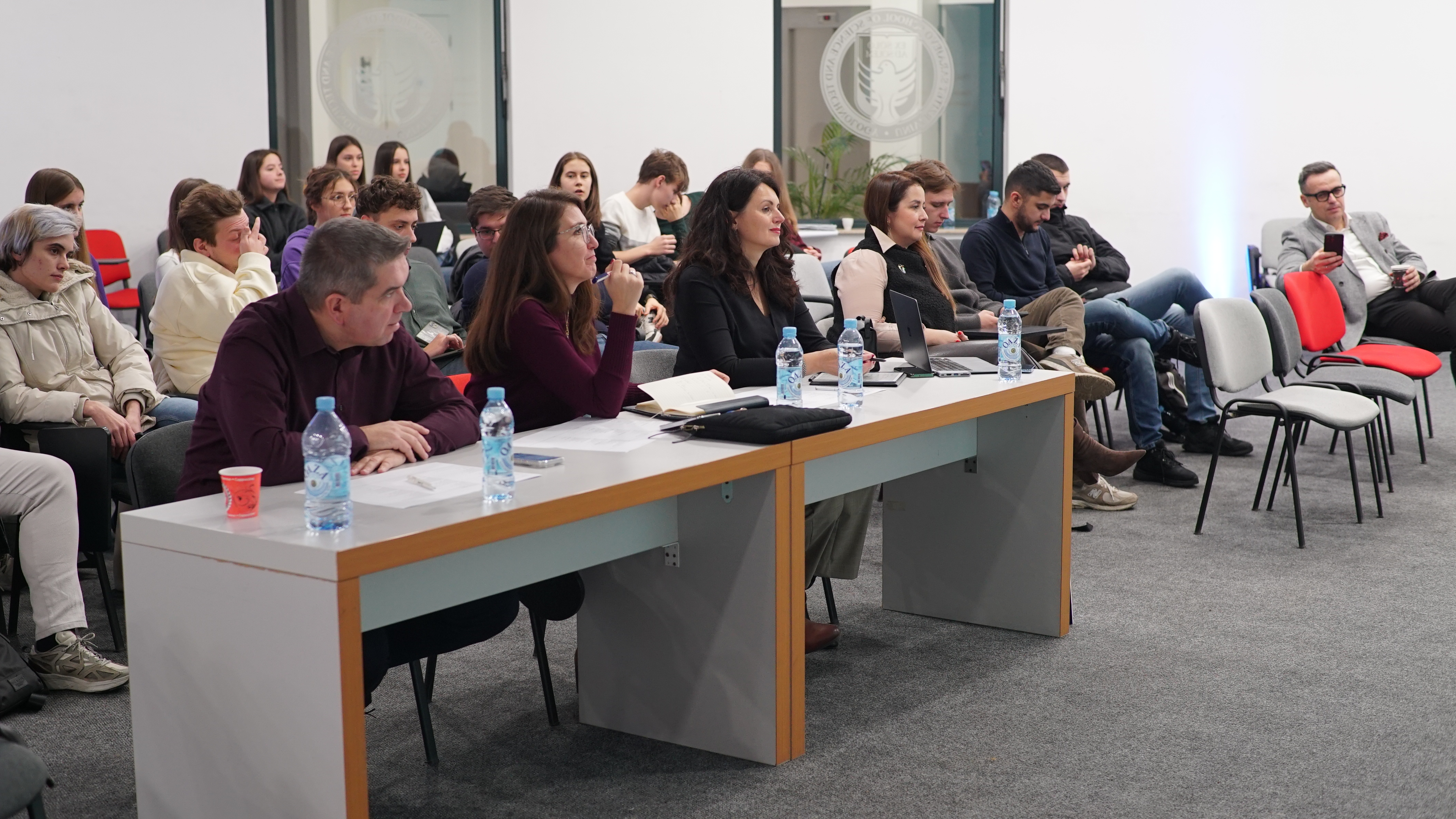
Each thematic track was supported by its own dedicated jury, composed of three members with relevant technical, academic and industry backgrounds. The Go Digital jury included Prof. Dr. Jasna Hivziefendić, Assoc. Prof. Dr. Jasminka Hasić Telalović and Miron Lukač, COO Bloomteq. The Go Circular jury consisted of Assoc. Prof. Dr. Belma Ramić-Brkić, Assoc. Prof. Dr. Azra Bečirović and Assoc. Prof. Dr. Amer Čeljo. Amela Brčaninović, Foundation 387 project manager, Prof. Dr. Ermin Cero and Prof. Dr. Semira Galijašević were the members of the Go Sustainable jury. These juries evaluated teams within their respective themes and selected semi-finalists to advance to the final stage of the hackathon.
From mentoring to final pitches
Throughout the day, teams worked intensively on developing their solutions with continuous, hands-on mentorship provided by Prof. Dr. Nedim Čelebić, GIIA Project Coordinator at University SSST, and Assoc. Prof. Maja Petrović, GIIA Project Key Expert from the Faculty of Technical Sciences, University of Novi Sad. Their guidance supported teams at every stage of the process – from problem understanding and solution framing to refining concepts and preparing for pitching – ensuring that ideas remained grounded in real industry needs while maintaining a strong innovation and sustainability focus.
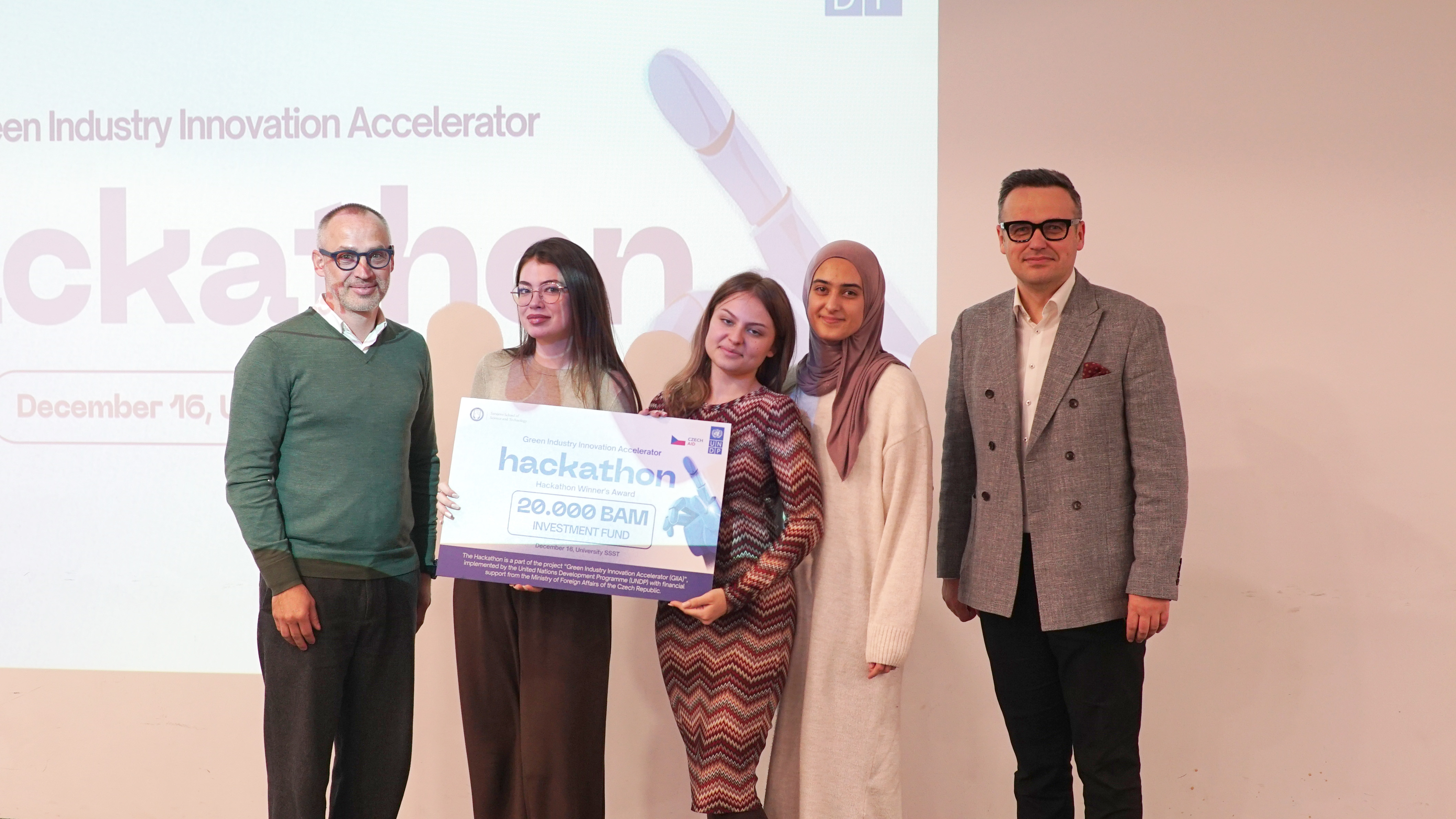
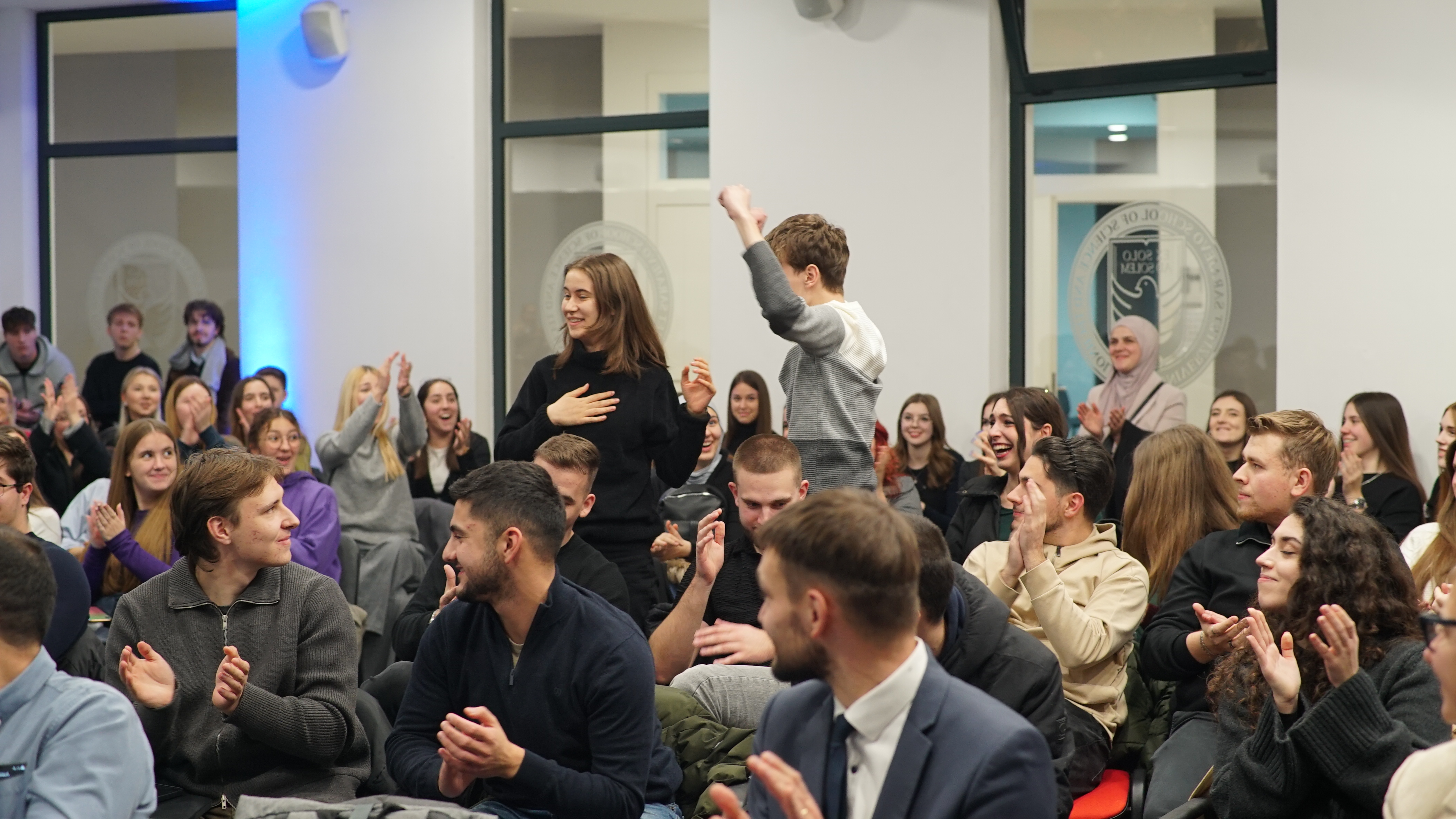
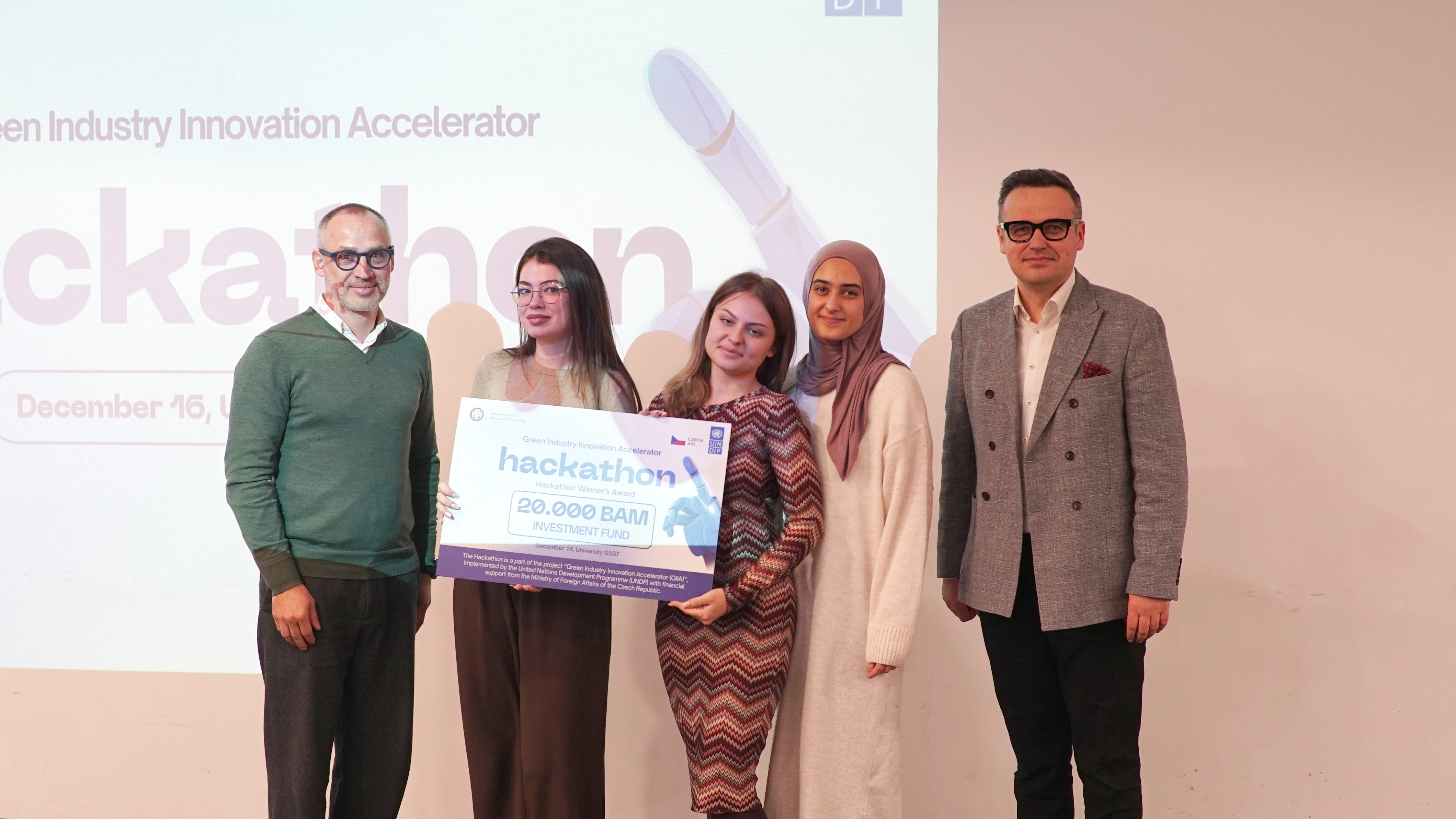
Following the semi-final presentations within each thematic track, a final jury consisted of Ismar Ćeremida, Head of the Sustainable Growth Sector at UNDP in Bosnia and Herzegovina, Prof. Dr. Jasna Hivziefendić, Dean of Computer Science Department and Head of Office for Project and Research Administration at University SSST and Assoc. Prof. Dr. Rasim Jusufović, Dean of Sarajevo Medical School at University SSST reviewed and assessed the shortlisted teams and their pitches. Based on the quality of solutions, feasibility, clarity of presentation and potential for impact, the jury selected the winning team – C-PASS – which was awarded a 20,000 BAM Investment Fund, supporting the further development of their solution and its potential application the industry.
Building momentum beyond the Hackathon
While the investment award marked an important outcome of the hackathon, the broader value of the event lay in the quality of dialogue, the collaborative atmosphere and the exchange of knowledge between participants, mentors, jury members and partners. The Green Innovation Hackathon demonstrated how structured innovation processes, grounded in real industrial challenges, can empower young talent and contribute to more sustainable, future-oriented industrial practices in Bosnia and Herzegovina.